Episode Transcript
[00:00:00] Speaker A: How do you do that all at once?
[00:00:01] Speaker B: It's, to say the least, not easy. It's really never easy. I never have a break, but that's what keeps me motivated. I like to stay busy. I kind of go crazy if I don't have something on my schedule, so there's always something that I can work on.
[00:00:19] Speaker A: Welcome to why they Fail, the podcast that pulls back the curtain on why continuous improvement efforts fail. Buckle up because we're not here for motivational fluff dissecting the short sighted decisions and leadership agendas that sabotage CI success. But don't worry, we'll clue you in to the few simple keys to success to avoid these pitfalls. If you're ready for the truth, let's do this.
[00:00:52] Speaker C: Welcome back to why they Fail, the podcast where we pull back the curtain on why over 90% of continuous improvement efforts crash and burn within 18 months and reveal the operational secrets to true success.
I am your host, Kevin Clay, master black belt and President of Six Sigma Development Solutions.
Today we are doing something incredibly special. We are looking at the future of leadership through the lens of a phenomenal generation. Gen Z. My guest today is a powerhouse 13 year old rising 8th grader who perfectly embodies how this next generation understands hard work, intense motivation and systemic teamwork. She is the current Junior Miss Emerald Coast, a former Joy Club president, a National Junior Honor Society inductee, and an elite athlete entering her fifth season of All Star competition on a highly competitive level. 4.2 Senior Elite Cheer Team Please welcome my beautiful and motivated daughter, Claire Clay. Claire, I am so excited to have you on the podcast to talk about how the grueling world of elite competitive cheer directly correlates to standard work, cross training and process reliability in the corporate world.
[00:02:15] Speaker A: Claire, I am so excited to have you on my podcast today. For those of you who don't know, Claire is one of my three beautiful and highly successful young daughters. Claire, you are our current Junior Miss Emerald coast and an elite 4.2 cheerleader, which is an amazing resume for a 13 year old. Before we look at how your team hits those massive stunts, take us back to the beginning. What was the initial spark that made you want to step onto a pageant stage and fly through the air in competitive cheer? And how did you get to where you are today?
Give us a little background.
[00:02:54] Speaker B: It's not easy.
It took a lot of dedication and a lot of preparation and I had to really want it. And that's a big thing with being in these two competitive sports. It's not easy and you definitely need to be organized and you need to want it. If you don't want it, it's going to show. Especially with cheer. If you step on that stage and you don't like it, the judges will know. You have to love the sport to be good at it. And that's something I'm good at. I love cheer and I love pageants and so therefore it shows. I love going into the gym. I love seeing my coaches. That's probably my favorite thing about cheer. The environment and the people around me, the athlete next to me on my left and right. I just love going in every day, seeing them, getting a big hug, walking to that gym and, and the coaches scream my name, give me hugs, have nicknames for me. That's just, that's so inspiring. Especially with the pageant industry. I love everyone around me being there early, getting to say hi to all the littles and being a leader to all the little girls. I love getting to know everyone, all the fun parties and just feeling special and feeling like I am someone special and I'm able to show, show it.
[00:04:12] Speaker A: Yes. Claire, when I see you on stage at a pageant or when I see you on stage for cheer, you're smiles from left to right and you glow and people just love to be around you and you are a leader. I, I see you when you're cheering. You go in the back and you're cheering other people on. You're motivating them and it just blows me away when I see that. It's awesome. I want to ask you some questions. You have won some amazing titles like Junior Miss Emerald coast, but you are also a serious powerhouse on a level four two senior elite cheer team. How do you balance the glamorous pageant stage with the high flying, tough world of competitive cheer?
[00:04:55] Speaker B: It is not easy. As I said before, it takes a lot of dedication. I need to stay very organized and I need to know what I'm doing that day and how I need to place it out and how I need to organize everything.
I need to know that I have cheer at this time. But also something that helps me balance it out is I know that where I want to be in pageants takes me to be able to be good at cheer. I really want to go forward with the Miss West Florida pageant also, if I win that, go on to the Miss Florida pageant. I know that I already want to do cheer as my talent.
So I've had to put my heart into cheer currently for the past year or so. And that's hard because of how much I do love pageants, but I know that I have to push them aside for a bit so I can grow and be able to be better at cheer, which is shown. And I've progressed. I've very much progressed. I have to work on my flexibility and my tumbling because that is one of my not as strong suits. So I need to work on them. I need to stretch every day.
I need to tumble as often as I can. I need to put in the work if I want to be okay.
[00:06:07] Speaker A: Yes. And you work out. You're in practice every day. You're doing coaching with your different peers. You're doing privates, you're doing all this. And I've seen you progress through the different levels. And then this last level, you jump from a 2 to a 4 2, which now you're competing with people that are 18 years old. And it's a phenomenal thing to watch.
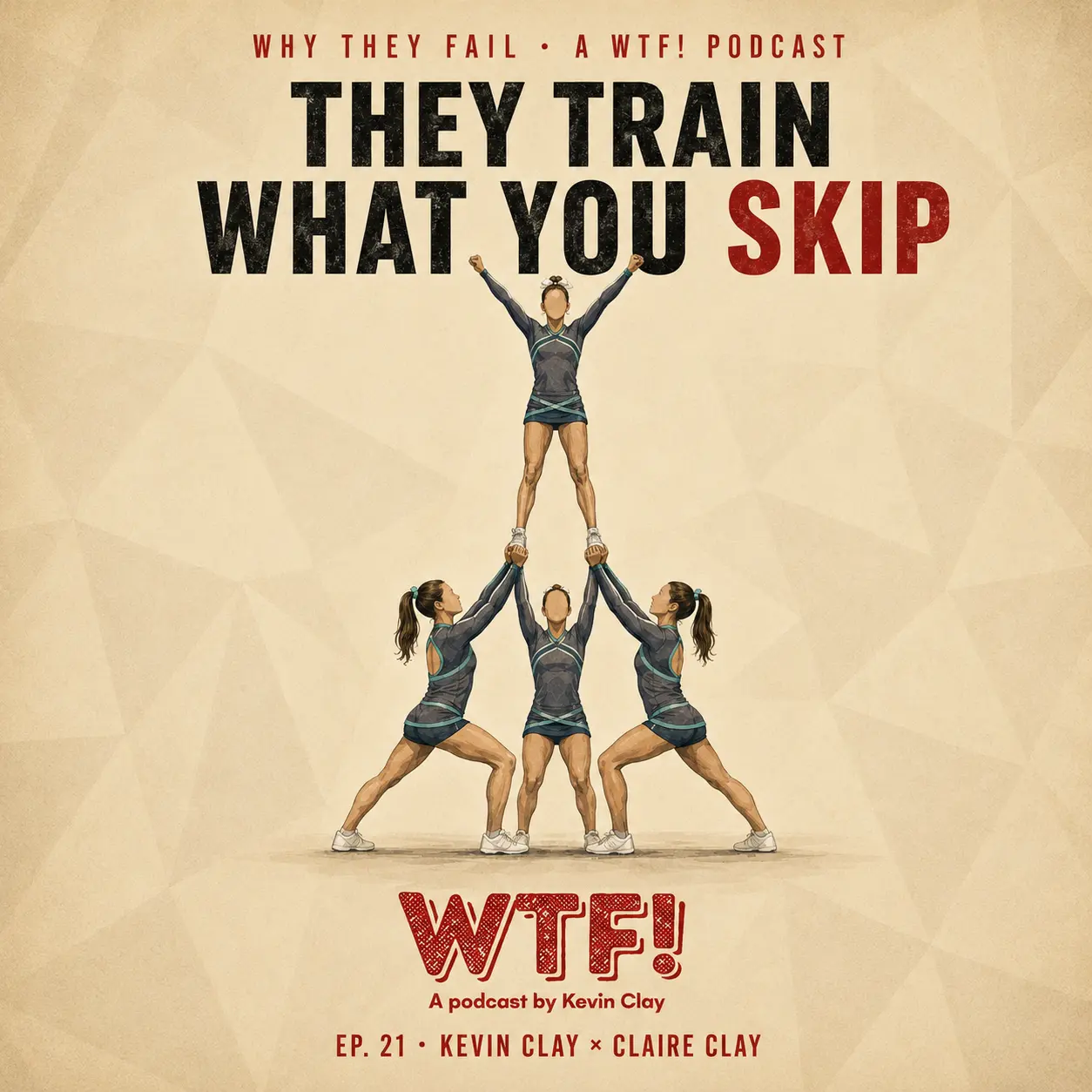
All right, so your coaches have a rule that every stunt group has to be able to change athletes from one stunt group to another in their same spot. Why is this so important? That the stunt works perfectly no matter who is paired up together?
[00:06:50] Speaker B: Yes. This is an unspoken rule in cheer. If a stunt group needs a different flyer or a different base for different reasons, it could be the flyer needs to have different flexibility or it's the spotting. The spots in the mat are not working out and they need to change it up. You should be able to put any base, any flyer, any back spot in a group, and it should hit. Everyone as a team should be able to do the same thing, and we should. The basketball should have the same grips, the bases should be holding the foot the same, and the flyer should be doing the same exact thing as the girl to her right or left. There's no difference in who we are. We need to do the same stuff. The only thing different is the face you're looking at. You need to be the same. And it's not just. If you're comfortable with a group and you like how they do it, we should all be the same, so we're doing the same stuff. So if you change in the different group, it's the same.
[00:07:48] Speaker A: I see this in a corporate setting, so I've watched you and your teams, and they're practicing every day. I was in the military, you know that, Claire. And we do things by the numbers. When a US Soldier goes out and goes to war, he goes and he knocks the thing he's been practicing for years with really not wanting to go to war. But that means that we can go Out. And when we're engaged in something tough, we've practiced it so much, it becomes muscle memory. We just do it because in our heads, it's drilled in. And that's the same thing I see with your coaches, is that they practice what's called standard work. What we call standard work is the same thing over and over and over again. So your muscle memory starts to learn it, and you don't even think about it. You just do it. I'd see a lot of companies that practice this, and I also see a lot of companies that don't. Those companies I see that don't practice this. They throw people into a process in which they've really never been in. So think about in your cheer group, throwing somebody into that cheer group who knows nothing about what you're doing and what your stunts are and then expecting them to actually perform. It leads to people can get hurt, defects, and that leads to you not winning. I watch you in your class when I get a chance, and I thought of that. Wow, this is just like the good corporations are the ones that have leaders that do this. And that's why eventually, once you get into a workplace, you're going to take what you learned in cheer and it's going to correlate to what you do outside in your career, and it's going to make you phenomenal.
[00:09:31] Speaker B: It's a variety, and we're able to make a good team out of that. Also, if one person gets hurt, one person isn't able to go to a competition, we usually put in a higher athlete onto our team so that they are experienced athlete and are able to help us with our competition and keep our team very successful.
[00:09:53] Speaker A: I've been to a lot of your competitions, and there's been a few that I go to where people are sick. I mean, they've got the flu. And your teammates, man, they are tough. They are tough because they say, no, I'm sick, but I'm not leaving my team. Being in the military, it's kind of the same thing where you have somebody that's your brother that you're not going to leave. So it doesn't matter if you're sick. You're still going to be part of the team and do what you got to do.
Sometimes people are so sick that they can't show up. Right. You have to learn how to supplement for that quickly and be able to fill in another position and still do the job. You know, we. I think we want to summit and something like that happened. Right, but you still came out on top. And it amazes me how all of your team members, they're such great teammates and they're almost like a family.
[00:10:44] Speaker B: Yes, that's very true. We, some of our teams have to get a fill in that day on the competition. I know famous cheer teams have to practice the day before and go out and perform it. That happened to one of our coaches team, our big team, Someone wasn't able to make it. They called someone in, flew in that night and competed. It just things like that. And they won, got first place, they won summit, Things like that happen.
We should all just be a team and understand that not everything's perfect, things are going to go wrong. But we're a team and we can get through it. And we always do it all. We always get through it.
[00:11:25] Speaker A: That's a great thing to learn from cheer, right? How to be a teammate. I think that's one of the best things that you eventually, when you get into your career are going to learn from cheer, is how to integrate all these different personalities. Because some of you might not be friends outside of cheer, but once you get into that cheer group, you all gel, you all get along and you know how to cohere as a team. It just blows my mind to watch, watch you girls at each of your cheer competitions. So if a stunt drops during practice, it's easy for people to start pointing fingers. How do you and your teammates figure out the actual root causes of the mistake and like maybe a timing mix up instead of just blaming one person's strength or height?
[00:12:15] Speaker B: Yes, we are all human. It's very easy for us to just start pointing fingers at people and blaming everyone. And through the years that I've cheered, I've realized that communication is key. You really have to communicate with your group and sometimes you need to take the blame for it. But I've realized that as a team, we're all going to do the punishment. It's not just the flyer, not just the back spot, not just the bases. We all messed up. We all could have done something better. So we all do the punishment. We all work together.
And maybe next time on our different rep, we get a coach to come help us and look at it so that he can help us figure out what we can do better our next time so that we can be a successful group.
[00:12:57] Speaker A: And your coaches, they're not nice and easy on you. I think you do crunches, right? What are they called? Burpees.
[00:13:05] Speaker B: Yes.
[00:13:05] Speaker A: Yeah, you have to do burpees. If you screw up, you get some feedback, right? You have to do burpees.
[00:13:11] Speaker B: And most of the time a group messes up, the whole team suffers. We all do the burpees together. It's not. Sometimes it's not just one group. We're a team, so we do it as a team.
[00:13:21] Speaker A: That's amazing. I correlate this back to my time in the military and, you know, grandpa was a marine and when I would get in trouble, my dad would make me do push ups and make me run and do all that kind of stuff. But I love the fact that, that you're getting that feedback and it ends up being physical. It's something that even though you get feedback, you're getting strong from it and it's making you become a cohesive group because that coach is kind of the outside force, but they're trying to push you forward and I love that. About your coaches. What do you like about your coaches? How do they push you forward in cheers?
[00:14:02] Speaker B: They really care about us. That's something that I've realized. Every coach loves us. They love us like a kid. That's what my coaches tell me. They're like, you are our kids. Like, we love you like our kids. They very much care for us. They understand as they are very tough on us. And it may be hard sometimes, we may be going home sad, crying to our parents. It really does work. We are successful and some things are hard to hear, some things we don't want to know. But it's. That's how we become successful. Some things, our coaches, they very much drill into our head, muscle memory. They're kind to us. They help us understand what we did wrong so that we can do it better the next time.
[00:14:46] Speaker A: I've heard that the good teachers, good mentors, are people that expect a lot out of you. They don't let you sit back and cry about stuff. They help you and they push you forward. But they also are very strict, right? Having to do burpees, having to do crunches and having to feel that pain because I've done something wrong and I don't want to do it again. So I grew up that way. My dad was like that. The military taught me that. But it's funny, that correlates to business, right? So a good leader, a good business leader is not one that says, hey, you do this, and then yells at you if you don't do it. But a good business leader is someone who not only tells you to do it, but teaches you how to do it right and gives you feedback. And then when you don't do it correctly, there, there is some kind of a feedback and that could be, you know, push up or whatever. I'm not saying that in a corporate world, but same thing, right? I love that you're learning that in cheer because that is going to carry into your business, into your job, into whatever you, you're maintaining an awesome, honorable freak. Very, very smart girl. You served as the Joy Club president, I think when you were in the fifth grade and you trained for literally hours a week at the gym constantly. What is your secret trick for organizing your time so you can smash your goals in school, in pageants and cheer? And that's a lot to put that all together. How do you do that all at once?
[00:16:21] Speaker B: It's, to say the least, not easy. Some weeks are better than others. I have hard weeks, I have good weeks. It's really never easy. I never have a break. But that's what keeps me motivated. I like to stay busy. I kind of go crazy if I don't have something on my schedule. So there's always something that I can work on and I know that, I know that I need to improve on my flexibility. I need to improve on my tumbling. I constantly tell you and mom I need more privates. I need to get into the gym or I want to work on this for my pageants. I need to write an essay. It's not easy, but I definitely have learned. I can adjust things. I can adjust my schedule.
I know that if I have early practice for cheer, I can work on my homework later or if I have a late practice, I can work on it earlier. I trying to fit things in. I know I need to stretch every day. So I get on that. And I have flyer homework. As I am a flyer. I have to send in pictures and videos of me stunting once a week. So I'm good at scheduling that once a week so I'm able to do it every single week and not be stressed if I didn't do it or oh, did I maybe mess this up. I'm able to adjust my schedule so I can be successful.
[00:17:42] Speaker A: I will tell you that. It's been an honor for me to watch you grow into the awesome 13 year old that you are.
I love to see you. Of my three daughters, Claire is one of the the most motivated to get things done and I love that.
[00:18:00] Speaker C: What an incredible conversation with Claire. It is clear that Gen Z is building an extreme extraordinary foundation for future leadership. The main takeaways from today's episode show us that elite success comes down to treating your operations like a universal stunt group. We learned that true process standardization means reducing variation so tightly that any qualified team member can step into a role and execute flawlessly without relying on a single superstar.
We talked about how cross training creates a crash proof team matrix that keeps organizations resilient when adversity strikes, and how a mature culture stops finger pointing and uses root cause analysis to fix the system rather than blaming individuals. When the next generation is already drilling muscle memory, accountability and the first rule of change management into their daily lives, the future of business leadership is in phenomenal hands. Thank you so much for listening to this episode of why they Fail. If you want to make sure your own organization doesn't become a statistic, make sure to grab a free PDF copy of my book why they Fail and the Simple Key to Success using the link in the show notes below. Before you go, please take a quick second to subscribe to our YouTube channel and it is a completely free way to support what we do and helps us bring you more insightful episodes. Also, make sure you are following the podcast on both Spotify and Apple so you get every single new episode delivered to you instantly.
Finally, if you found value in today's breakdown, please leave us a five star review. Your feedback keeps us moving forward. Stay disciplined and keep drilling your processes and we will see you next time.