Episode Transcript
[00:00:00] Speaker A: I think the most important bit about Amazon is that they treat a continuous improvement expert, or individual or someone working in operational excellence as an enabler. We don't work in silos, we work with the operations.
So it's not only that one person gets the green belt training or the black belt training or whatever kind of Six Sigma training and they start going into the shop floor and solving problems. We enable our teams, we enable our operation teams to deliver real continuous improvement and real cost efficiencies and real values to our Amazon customers.
[00:00:36] Speaker B: Welcome to why they Fail, the podcast that pulls back the curtain on why continuous improvement efforts fail. Buckle up because we're not here for motivational fluff. We're dissecting the short sighted decisions and leadership agendas that sabotage CI success. But don't worry, we'll clue you in to the few simple keys to success to avoid these pitfalls. If you're ready for the truth, let's do this.
[00:01:09] Speaker C: Welcome back to the why they Fail podcast.
I am your host, Kevin Clay, master black belt and CEO of Six Sigma Development Solutions.
Most companies operate on sheer guesswork, treating continuous improvement like a new toy until the novelty wears off. But today we are diving into a culture that does things completely differently.
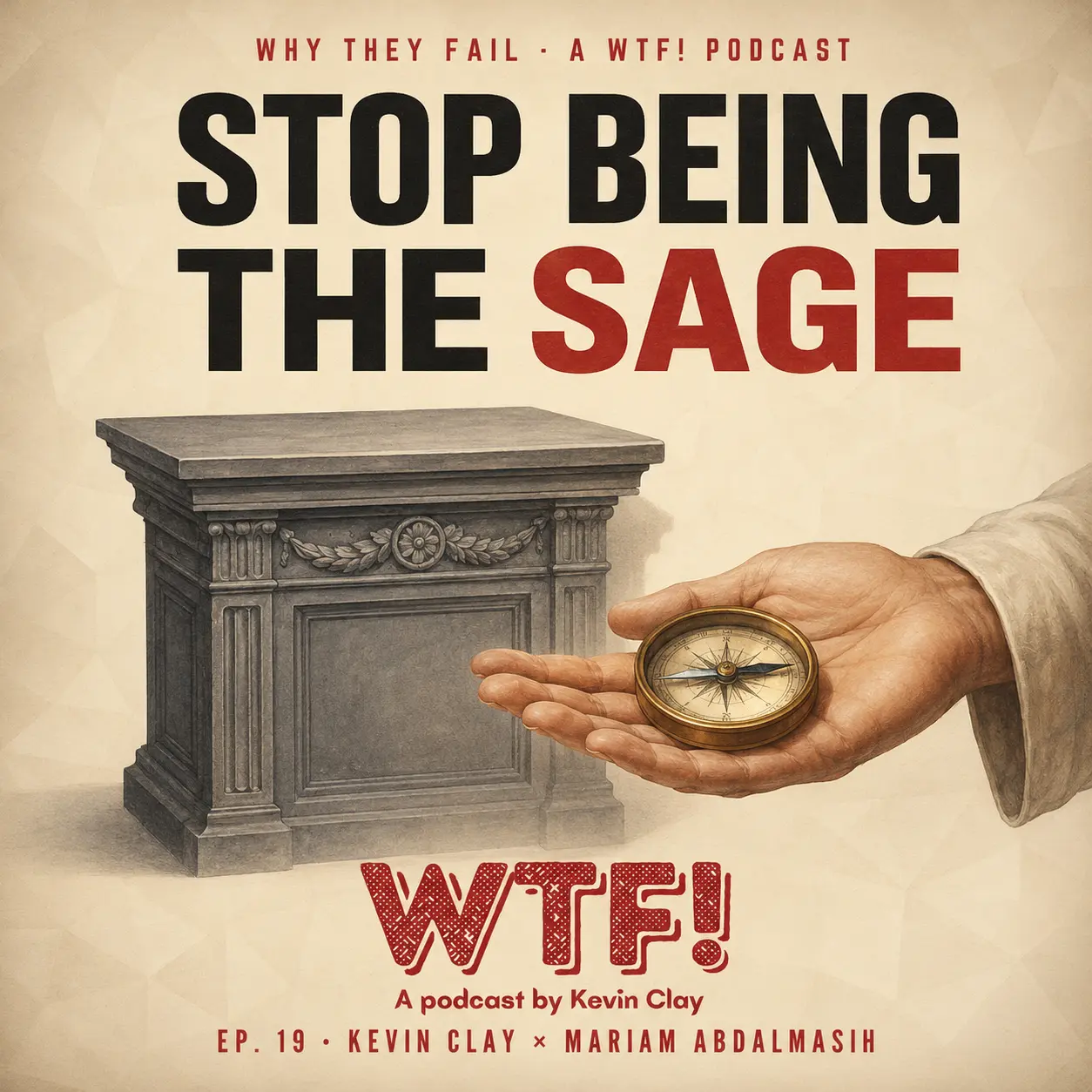
Joining me is Maryam Abdelmasi, an incredible senior process improvement engineer for Amazon's London fulfillment operations.
Mariam is a highly accomplished industrial engineering graduate from Alexandria University who holds a Six Sigma black belt along with specialized credentials in process safety, logistics and transportation.
Over her impressive career spanning global roles at Pirelli, Cargill and Amazon, she has driven complex cross functional programs across 22 countries and four continents, racking up over $15 million in cumulative cost savings and massive cycle time improvements.
In this episode we explore the fascinating truth about Amazon's daily deep dives, metric cascading and structured chaos. Most importantly, Mariam breaks down how Amazon shatters the industry myth of the lone problem solver, instead training their continuous improvement experts to be true enablers on the floor. Let's jump right into my conversation with Mariama Miriam.
[00:02:46] Speaker D: What got you into continuous improvement? What's your history? What was the catalyst for you getting to where you are now in Amazon?
[00:02:55] Speaker A: I think the starting point would be from earlier. When I first graduated industrial engineering, I studied a major in supply chain. I was like kind of confused what to do with my life, what to do when it comes to career path, what to take over. And then I started my my early career in Pirali, which is the big tire manufacturer and I was part of the research and development team And I really enjoyed the different projects, the different improvements. We are doing the market research, the market recall, etc, but it's not happening all the same, all the other companies. And for me it, it meant that I have to be an expert on tires manufacturing to keep working in research and developing. And then it hit me that it could be something else. It could be kind of another job that would be having this kind of changes. And that's when I started to interact with the continuous improvement engineers in Pirelli and I started looking for similar jobs. And from Pirelli I moved to Korgil and in Korgill. It was kind of like talent programs. And in the talent programs I had around three or four months shadowing the site process improvement engineer. And that's when I instantaneously fell in love with the job. It's, it's operation oriented, it's project oriented, it's program management oriented, it's, it's a non endless job, I would say, because sometimes when you're learning something, you keep learning and learning and learning and you become an expert. But I would say in continuous improvement you could become an expert on the methodologies. But there's always a room for learning and for delivering new projects and for having something exciting and interesting every day. So that's what got me hooked up with the job itself.
[00:04:35] Speaker D: I would say I tell people that I'm a master black belt, but that word master means nothing. It, it just means that, that I don't know anything. Right. I've been doing this for almost 30 years and I've really touched the tip of the iceberg.
[00:04:50] Speaker A: I would.
[00:04:50] Speaker D: That continuous learning that you're talking about is most people don't really understand that, that if you get into this, this is a lifelong learning. You learn something every day.
[00:05:01] Speaker A: Yeah, I would say so. And it's really, really helpful for me to like use the mindset and the transferable skill set between different industries. So it's very helpful when you're starting something new, new process and you just use the same mindset. It's exactly the same. You just dive deep into it, you learn what could be improved and you go and improve it.
[00:05:22] Speaker D: That's a good term mindset. If you're going to survive in this methodology, you have to learn to really change the way you think about things. Right? Not to look at the improvement, but look at the analysis of it, the taking it through that process.
[00:05:38] Speaker A: I went directly from Cargill to Amazon. I moved from Cargill, Egypt to Amazon uk. I worked within the Health and Safety Organization as A process engineer for a while and then I, it was, I think just for a year and then I went back to continuous improvement directly. I, I and, and I've been in continuous improvement with Amazon ever since.
[00:05:59] Speaker D: Amazon is really kind of famous for its daily deep dives and, and operational standups. But most companies I engage with run on guesswork. How does a highly structured metric view prevent leadership from treating a methodology like a new toy that they play with until the novelty wears off?
[00:06:18] Speaker A: I think the most important part about it is that we build a system. We don't depend on people's knowledge. We have everything documented, we have all the metrics documented. Amazon is a very, very big company, very well established. So we don't reinvent the wheel every day. We don't check for a new metric every day to review in the daily deep dives or standups. We don't invent certain metrics for the daily deep dives and then another one for the weekly business reviews or the weekly deep dives or another one for the monthly reviews. It's just the same metric. We keep sticking to it and we iterate from there. So whether it's a continuous improvement function, whether it's a safety function, we all servicing the same and the main metrics. So I would say as a continuous improvement in Amazon, we don't treat it as a new function, new system we're playing with, we treat it as an inherent part of the process. It just, we, we will become obsolete if we don't continuously improve.
So I would say this is, this is the best thing about Amazon is that we embed the continuous improvement methodologies into our metrics themselves so they become relevant each and every day.
[00:07:30] Speaker D: So your metrics cascade down through Amazon, Right? All the way down to, to the floor?
[00:07:36] Speaker A: Yeah.
[00:07:36] Speaker D: Does that mean that on the floor I have metrics, I have numbers sell, my unit has to hit. Right. And those cascade up to larger corporate metrics.
[00:07:48] Speaker A: Yes.
[00:07:49] Speaker D: So if I'm not reaching those metrics, I know it because is it displayed somewhere? When you do your daily standups, do you do those standups at. We call Gemba at the unit or at the work cell?
[00:08:02] Speaker A: Amazon does things differently. So we have walk the floor, we have shop floors, gembas happening twice, three times a week. We have morning gembas, we have night gembas. We have gembas across different organizations. So we would have people from other sites coming to do gembas into our site. We'd have people from other business units, like totally different part of the business would do gembes into our Site. So Gembes on its own is an independent system that we use to verify the metrics, the numbers we are seeing in the daily deep dives and the weekly reviews and the monthly reviews. So we would do the daily reviews with the functional heads and the managers, but those same functional heads and those same managers do take the gimbals walks into the floor and validate and verify those metrics that we are seeing in numbers. Because at the end of the day we could be seeing the number moving up or down, we don't know. But when you walk the floor you could notice something completely different.
[00:09:01] Speaker D: So.
[00:09:01] Speaker A: Right, yeah. So we embed everything together.
We have the gembas, we have the change management system, we have the daily standups and the daily dive dives. I would say it's a very developed and very mature system so that we. You don't need to have the daily standup on the floor because you are already doing this as part of the entire system. You're incorporating the actions out of the GEMBA into the daily feed, dags into the weekly business reviews, you're incorporating the risk assessments, the change management systems. Everything is embedded into one place. We actually have like, like a single portal. We use continuous improvement, safety operation. Everybody is using the same platforms and the same dashboard. So we have the visibility over what's happening in numbers and on the floor as well.
[00:09:47] Speaker D: Do your operators on the floor have visibility to that information while they're working? They can see what their metrics or how they're affecting their metrics.
[00:09:58] Speaker A: This is actually one of the best things I really love about Amazon is that even the operators could see their metrics. So we have kind of like a display screens for our operators. They could see their metrics, they could see the rates, they could see their site metrics, they could see the difference between the other sites. So it's all part of a very, very good visual management system, I would say on the floor and on the dashboards for the managers, for the operators, for everyone.
[00:10:25] Speaker D: I hear a lot of terms that are more lean based, right. Gemba, you know, and on boards, et cetera. What about data? You say that there's a lot of metrics being shown, but are we using those metrics? Do they analyze those metrics and really start to lean more towards six sigma to understand the inputs that are causing variation in your distribution?
[00:10:49] Speaker A: One of our leadership principles is that we are a data driven company. We don't touch something unless we have a data proof and it's going to be deteriorating in the future. We take These data points into feeding our improvement projects. What kind of data did you have to support that project? What was the reasons? So I'll give you a simple example. Whenever, like the last Six Sigma project I worked on the initial phase, very, very initial phase, the defined phase. When we start drafting the problem statement, it has to be timed. So I can just say that that metric is deteriorating by 12% week over week. Starting from week X to week Y, that metric was deteriorating by percentage Z. So it's time bound. It' process bound in scope is defined, out of scope is defined. The incremental improvements or deteriorating percentages are defined and the goal statement has also be time bound. And like with certain percentages, we're trying to get to it, et cetera. Operate a very efficient data driven approach.
Everything has to be measured, everything has to be analyzed properly. Everything has to be time bound. Everything has to be structured. All stakeholders should be on board. You would do a role definition like who is going to be participating in what. To be honest, I doubt that I would be able to transition from Amazon to somewhere else because of how well it is structured.
It just, it makes your whole life easier. It makes your whole day to day activities easier. Because there is a system that would support you even if you're new to the company. There's a system that will teach you even if you are new to continuous improvement. And like process excellence or operational excellence or Six Sigma or Lean, you can learn everything from Amazon systems. It's there to help you, it's there to support you. It's there to give you the data from Enabler.
[00:12:43] Speaker D: And that's what it is. Right. You're enabling your SMEs, the people on the floor, to actually solve the problem. One of the things that I teach my students is you should never say this is what the improvement is as a green belt or black belt or lean agent or whatever you are. Right. Because by doing that you're taking ownership of their process.
[00:13:02] Speaker A: Yes.
[00:13:02] Speaker D: You use the tools to lead them. The tools are going to lead us to the right place. The data is going to lead us to the right place.
[00:13:09] Speaker A: I agree. Totally agree.
[00:13:11] Speaker D: I'm excited just to hear you say that. That's awesome.
You transitioned from corporate customer experience machine learning models back into fulfillment with Amazon.
So why is having clear objective metrics the difference between a project that hits yearly targets and one that just reacts to localized management panics?
[00:13:35] Speaker A: I would say because Amazon has a well established system. So I wouldn't say that the operation is of course we have the daily Firefighting, of course we have the daily discrepancies, but it's not always a panic, it's not always something that went off wrong and you just have to fix it. There are long term projects ongoing and there are long term planning happening and then being invested into the floor and into the operation. So I would say operation is much more intense, but it comes with benefits because you adapt faster, you learn faster, you have to adjust faster, you have to even adjust your long term projects faster to the changes that happen on the shop floor on daily basis and sometimes even on shift basis. So I think, I think because the system allows the teams to plan and have time to do a better planning, the daily panics is lower and the daily firefightings events and the daily, I would say off charts or off plan instances are not that much because there's a good governance in place, there's a good system in place, there's good people who would help you to sort everything and report everything in the appropriate time.
And I would say the word enablers, it doesn't happen one way. So us as Six Sigma practitioners are not only enablers to the operations, operations are also enablers for us to find opportunities by raising the risks and by raising whatever happens, whatever causing panics on the shift, on the day, on the week, whatever is changing on daily basis, they actually enable us to see long term what could have happened and we didn't avoid this time, but what we could have avoided and what we can plan better to avoid in the future.
So I would say the corporate customer experience, continuous improvement, or like the team I was working on initially with corporate was very, very good experience for myself in terms of project management. Like you get a long DMACC project, three, four months long, you take your time, arrange with the stakeholders, et cetera. And at the end of the day you need to get it right because this is going to impact directly our customers. I was working on projects that were like, it's going to change the way you interact with the Amazon app between doing two clicks into one click to get the item faster or something. So that's like a very, very close interaction with the customers and close impact with the customer. So the risk is higher.
You take your time in implementing a project and in implementing each phase and raising all the risks before starting deployment. So that space had its own benefits. But working in operations, that comes with a very, very fast pace and I would say a little bit further from the customer because in operations, in the warehouses, we are kind of like at the beginning of Amazon supply chain. So we're further away from the customer a little bit, so the risk is a little bit lower. But also it's a very, very fast based operation, a very, very fast paced business. Like Amazon launched Amazon, now you can order something and you will get it in 30 minutes. So you can imagine how much pressure we have to get things right from the first time. And I would say the culture and the leadership in Amazon, it kind of train you on this because we have a concept that is that decision going to be a two way door or one way door, meaning that if I change that thing, could I revert it back without any direct impact on the customers or not? So if that's the case, if I'm not going to impact on my customer, then it's a two way door. Let's do the project, let's do whatever changes we want to do, let's follow all the systems and get things smashing and get it done. If it, it's going to be, if it's not going to be revertible, then that's where we have to pause and think properly. So that concept of like two way door decision or one way door decision, it, it kind of gives people ownership because when you assess the risks for a project and you feel like yeah, that's a two way decision, then you're enabled to take the decision on your own and to do the changes and do the improvement. And I would say that's one of the things that, that really, really improved my leadership skills and it improved my decision making skills because after a while, just do it unconsciously. You think of the operational risk, you think of the customer impact, you think of the final project risk. And if it's something irreversible, if it's a one way door, then no, we will take all the time we need, we don't have to rush anything and we will deliver it right the first time. If it's something revertible, if it's a two way decision, two way door decision, then yeah, let's do it. Let's be leaders, let's enable it and take the decision and do it. And if something goes wrong, we just revert back. It's revertible, it's fun.
[00:18:34] Speaker D: So I want to break this down a little bit. So in the beginning you talked about chaos, the chaos of operations, but you talked about structured chaos.
[00:18:43] Speaker A: Yes, exactly.
[00:18:44] Speaker D: Most companies don't exist in structured chaos, they just didn't exist in chaos. Right. Where they're constantly firefighting battles every day. But in, in Amazon, you have a really data rich environment that data produces probably visual tools like say for example, control charts that help you understand trends in your process, which helps you to, even though there's chaos, you can kind of predict that it's coming.
[00:19:14] Speaker A: Yeah, exactly.
[00:19:15] Speaker D: Right?
[00:19:15] Speaker A: Yeah, exactly.
[00:19:15] Speaker D: And that I think that's one of the phenomenal benefits of using Six Sigma because it, it helps you to learn how to optimize a process instead of just reacting to it going bad. Right?
[00:19:29] Speaker A: Yes, yes, agree. Totally agree. And you use, and you use these dashboards and these metrics and these abnormalities and outliers in every day. Like, like when you're not even doing a Six Sigma project, when you're doing a Kaizen, you use the trends, you use the numbers, you use the discrepancies in the numbers that you have. Like if something goes off chart, you always take it into consideration. You never consider it an outline.
[00:19:56] Speaker D: Let me ask you this. And a lot of companies that I engage and again, they really focus more on Lean because they, they're somewhat scared data. They don't really allow their people on the floor to see those numbers, those control charts. I know in companies like Amazon that information is pushed all the way to the floor so the people who are at the operation can see the trends, can see the capability of that process.
Does that help your people on the floor to really understand that stuff right at the point of that process step happening?
[00:20:32] Speaker A: Definitely.
Because like for example, if we have something changing, we could pull the data for last year, for last week, for last three years and we could find if that trend happened previously or not. We could even find if that trend happened in other sites or not. We could check different sites, different site types, different regions, sites in America, sites in Europe, sites in Middle east, sites in Africa. So it's not that you're working with your own data in silos, it's you get to have access to all Amazon's data. And that's something very brilliant because as I was mentioning earlier, whatever happens in your site is probably not going to be an outlier. It's probably an outlier for your site only because with so much data in Amazon and so multiple and many sites that must have happened somewhere else. So you, you leverage that network, you leverage the, these data and you use it.
[00:21:29] Speaker D: I work with many multiple site companies. They have this going on where they solve a problem at one site, but that same problem happens at many other sites. But because the sites aren't interconnected, because they don't share data, because in most cases each site is in competition with the. The site that ends up producing silos, and it ends up producing processes where we have the same problem going on, but we keep solving it over and over, reinventing the wheel.
[00:22:01] Speaker A: Yeah, yeah, I agree.
[00:22:03] Speaker D: You said something else that caught my attention is that this methodology, Leon and Six Sigma, whatever you want to call it, it really changes the way you think.
[00:22:13] Speaker A: Yes, right, true.
[00:22:14] Speaker D: It really. It becomes innate in you. And that's what I try and tell my students. I said this may not help your company because your company might not have a structure for you to survive in, but it will help you change the way you think. And if you really use this and you use it all the time, it'll greatly alter the way you solve problems.
[00:22:35] Speaker A: Yeah, agree.
[00:22:36] Speaker D: Totally. And I see that. I see that, Miriam and you.
[00:22:39] Speaker A: Thank you. I totally agree. And I totally agree. And I would add to this that the continuous improvement methodology and mindset is very, very adaptive. Like, we're in the time of the AI and we're currently using AI to deliver.
So we're creating our own AI agents. We are creating our own, like, data analyzers, parts. We're creating our own reporting agents. So just the mindset itself, when it's embedded in your lifestyle, you're not afraid of trying anything. Like, you will try to leverage all the tool you have. You will try to leverage all the data you have to deliver. So as you mentioned, it's a mindset. It changes something in you, right?
[00:23:18] Speaker D: Yes, definitely. And I think AI just helps us to use our mind quicker. It takes away a lot of the heavy load so that we can improve processes that much faster. At Amazon, leadership capabilities are prioritized first. Right. So, and then the technical skills, you can teach that, but leadership capabilities, those, that's kind of hard to find. How does this strategy help mask the myth that Process Excellence Engineer is just really a lone problem solver rather than a mentor who guides and collaborates with the frontline?
[00:23:53] Speaker A: I would say that strategy helps by building a culture that we are all good leaders, and good leaders listen to each other.
So whatever you think you're doing right, there's always a room for improvement.
And if something doesn't have a room for improvement, or we are saying that this metric is green and that's it for this week and for next week, then it's either we are not anticipating risk properly, or we are not optimistic enough or like we're not willing to improve enough. And that mindset, it kind of comes natural to leaders when people have good leadership skills. And when Amazon focuses on embedding that leadership skills into their area managers, their program managers, their tech developers, all kind of functions that you will find in Amazon. Those leaders are willing to listen to you so they don't trust you because you're the expert on the process. They trust you. And I trust them because we are all leaders and we are here to help our teams enable our teams into delivering better results. So everybody basically knows that there's no such thing as like I'm a 100% expert on this process. Process. Even if I'm an ethnic, if I'm a subject matter expert on that process, I'm a leader. And a leader should develop themselves first, I would say. So that strategy and that good leadership skills that Amazon, I would say very, very carefully hand pick, it helps enriches the system. So Amazon picks leaders, Amazon developed leaders and those leaders will eventually have the right mindset to listen to you. So, and instead of coming to you to solve their problem, like I'd have people come to you on daily basis asking me for certain how can I play with that dashboard, how can I pull something from that data? Who would I go to to ask about that certain process or something? They know that I'm not their genie. They know that I'm not going to solve all the problems for them, but they know that I will be able to help, that I will be their point of contact when they want to connect with other people with other sites. They know I'm their point of contact when they want see how to improve something better, how to measure the median or the mean of the process, how to check the variabilities over the past few weeks, how to check numbers year to date. So the technical skill gap is solved on day to day basis. Even for myself, like I'm not expert on the process. If I go to the shop floor, every day is a learning experience for me. I don't know anything by heart if I go to the soft floor, but I leverage the leaders, I leverage the good people who lead the team on the shop floor and they leverage me. So I would say that strategy is very helpful when it comes to enforcing the mindset that we are enablers and we are here to help. And it goes the other way around as well.
[00:26:48] Speaker D: Miriam, you're a mentor. That's.
No, no, that is, it is a very good skill to have and a lot of times people are born with it and, and you have that. So thank you. It will make you an even better practitioner over time. I enjoyed today's discussion.
[00:27:06] Speaker A: Thank you.
[00:27:07] Speaker D: It was awesome. I'd like to see the I'd like to see that Amazon really has the culture and they follow What I try to teach companies is that you have to have the infrastructure first. You have to have the foundation in place, you have to have bought in leaders, you have to have KPIs, you have to have data and then and then you can start improving processes. But most companies do it backwards. They start out by just training somebody and then having that somebody be the COP for the company. And this goes away in most companies because they put it in backwards. It's really great that I see that a company has implemented this in a way that is sustainable.
[00:27:51] Speaker C: What an incredible discussion with Mariam. It is so refreshing to hear from a practitioner inside a structure structure as mature as Amazon's. The big takeaway today is that a world class continuous improvement culture cannot be built backward by just throwing a green belt at a problem and expecting them to be the company cop. True operational excellence requires the right foundation bought in leadership, cascading KPIs and a data rich environment that pushes visibility all the way to the the floor. Most importantly, we learned that a great process engineer is not a gene or a lone problem solver trying to be the sage on the stage. Your job is to be the guide on the side, enabling the subject matter experts who actually live the process every day to use the tools and discover the answers. Thank you all so much for listening to this episode. To help protect your own organization from the common traps that derail continuous strength improvement, remember to grab a completely free PDF copy of my book why they Fail and the Simple Key to Success using the link in the show notes below. Before you go, please take a moment to subscribe to our YouTube channel. It's a completely free way to support what we do. Also, make sure you're following the podcast on both Spotify and Apple so you get every new episode instantly. Finally, if you enjoyed today's insights, please leave us a five star review to help other continuous Improvement practitioners find the show. We truly appreciate your support and we will see you next time.