Episode Transcript
[00:00:00] Speaker A: What irritates you about a process, what you're doing right now? I want to make it personal to you. I want you to say this is irritated me. I've been working here for so long. This is irritating me. This process where I've got to take the paper from this point to this point, this point to this point, to that point and then maybe it gets routed to the right person.
That irritates me. I wish somebody would do something about it. Well, this workshop allows you to do it. I want you to find a project, a process to improve that impact your life because you're going to take it personal at that point in time.
[00:00:32] Speaker B: Welcome to why they Fail, the podcast that pulls back the curtain on why continuous improvement efforts fail. Buckle up because we're not here for motivational fluff. We're dissecting the short sighted decisions and leadership agendas that sabotage CI success.
But don't worry, we'll clue you in to the few simple keys to success to avoid these pitfalls. If you're ready for the truth, let's do this.
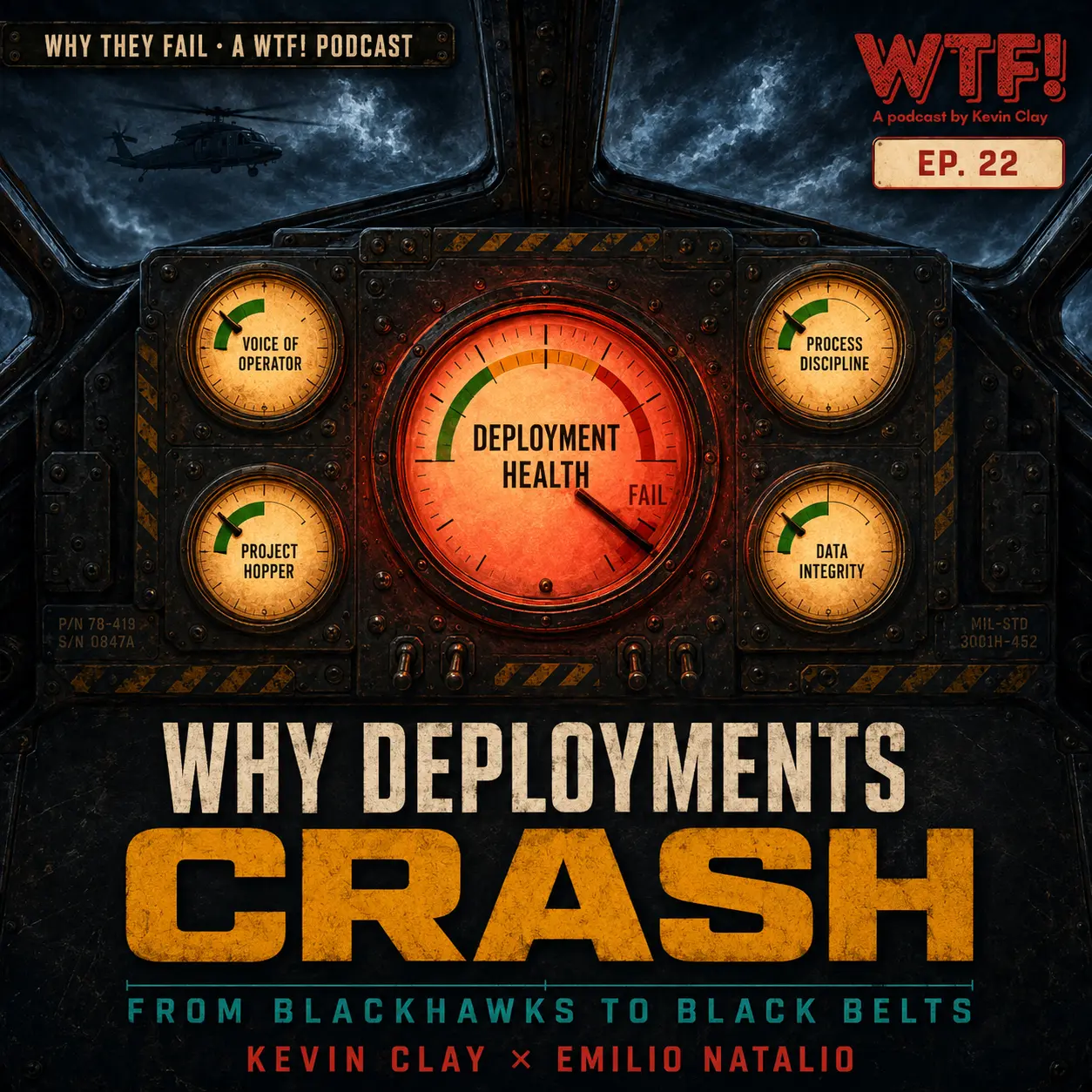
[00:01:06] Speaker C: Welcome back to why they Fail, the podcast dedicated to uncovering why over 90% of continuous improvement deployments crash and burn within 18 months and how you can build a culture that actually sticks. I am your host Kevin Clay, master black belt and CEO of Six Sigma Development Solutions.
Today we are diving deep into what it really takes to move past shallow check the box corporate certificates and build an operational blueprint that stands the test of time. Joining me in the studio today is Emilio Natalio, a retired military aviator and safety officer who took his years of high stakes military flight experience and channeled it directly into the world of organizational excellence.
Emilio is a true kinesthetic practitioner who believes in learning by doing and he has even authored a unique interactive book called the Lean Six Sigma Journey, designed like a pick your own adventure story to teach real project decision making. We are going to unpack his incredible transition from piloting Blackhawk helicopters to steering massive process improvements, why standard slide deck training creates dangerous paper belts, and how local governments and organizations can build real sidewalks between siloed departments. Let's get right into the conversation.
[00:02:32] Speaker D: Neo, what was the catalyst that got you into continuous improvement? What what started your journey?
[00:02:39] Speaker A: Well, it's a very simple story and yet which kind of threw me off years ago. I'm a retired army guy and when I was in the army, another retired aviator just recently retired and he was out in the job market looking for jobs as you do post retirement in the military and he happened to call Me, and this is 2013.
I remember I was sitting in my office, he called me out of the blue and he said, hey, I don't know what this Lean Six Sigma thing is, but every job interview I've been on, they've asked, do you know what Lean Six Sigma is and would you be willing to get training in it? He goes, I have no idea what this is about. He goes, I don't know what it is. I figured you might know something and thought I'd ask you. So that got me down a rabbit hole of researching what Lean Six Sigma was. I've heard it through my college courses and stuff like that and they periphery of things, but really going down that rabbit hole spun me up and getting ready for things to come later in Life. So about 2013, I was introduced to it. In 2020, I really got into it. 2019, 2020.
I mean everybody was locked down. So I started taking a bunch of courses online, doing workshops, research and stuff. And I just found it really interesting that there was a method to go from start point to end point to see if you can improve a process which is kind of correlated with what I was doing in the safety world as well in the army. So you can kind of do the parallel, so it kind of just naturally fit. But I, I give all the credit to Joe Calloway, the guy who called me that day and out of the blue just asked me a question and that's basically my story and, and a
[00:04:13] Speaker D: shout out to Joe, right?
[00:04:14] Speaker A: Yeah, exactly. He got me going on this day again. It's just a fun, I just thought it interesting just to march forward all the way through and see if you can improve something.
[00:04:23] Speaker D: Well, over the years since then you've done quite a bit, so you've really dived into this head first.
[00:04:29] Speaker A: I have. I started working for another training company while I was still technically in the, in the army still. I was at the end of tenure there and it was during the pandemic, so really people were doing other things. Anyway, so I started working there, doing yellow belts, green belts, and I became a black belt and went off to the natural black belt stuff. But then I started working there helping coach yellow belt projects and that was real fun. And then when I retired, I kept working there for a long time and it just, it was a fun way of looking at quick win projects, looking at the full blown black belt projects to see the differences. And then sometimes I would have Kevin come in and have no experience. And then a year and a half later, two years later, he'd be doing bigger things and we would still be coaching together. And still at that point in time, we're just kind of spitballing together. So it was kind of fun at that point in time meeting new people and finding new industries. And just because I'm retired military, so I know this, but working with projects, I was working with government people. I would work with a noodle factory person, T shirt company, paper people. It was just interesting that there's a whole different world out there that I didn't know about.
[00:05:38] Speaker D: I like to say that. You ever watch that show, how it's made?
[00:05:42] Speaker A: Yes.
[00:05:43] Speaker D: On table. We live that. We go into thousands of companies and see how everything's made, whether it be a manufacturing or healthcare or whatever. But it's cool to watch all these different processes and be able to see and evaluate them from the outside and to really create a culture. That's what I see in you is you have fun with it. Right?
[00:06:04] Speaker A: You have to have fun with it. It's. It's mandatory for you to go, well, if I don't have fun with it, you're going to be not having fun. You're not going to learn anything. Let's have fun with it. There's no wrong answer here. Let's just keep poking at it and see what we can get to. And that way we just keep finding new ways of doing things and eventually something's going to fit. I know that the domainic process and this happened. You got to have a little fun with it. If not, you're going to go insane. If you're just looking for data, data, data. You got to have a little fun along the way.
[00:06:30] Speaker D: Right? There's gotta be a carrot at the end of the stick.
[00:06:34] Speaker A: Exactly. That's why I always bring candies to all my workshops. You got to have sweet treats.
[00:06:38] Speaker D: I find that's a good incentive, right?
[00:06:41] Speaker A: Yeah, exactly.
[00:06:43] Speaker D: Awesome.
So what was the ultimate catalyst that pivoted a Blackhawk pilot from flying to being into the world of Lean Six Sigma and Lean Six Sigma puzzles with your choose your own adventure.
[00:06:58] Speaker A: Well, I think what the biggest thing is, it's. I went. I don't want to say rigid because I just kind of want, you know, we kind of went the way of. Yeah, I got fun, but it is very rigid. There's a. There's a step to each process. There's a process, there's a map you're following.
Just like flying, you have a flight plan. This is what you're going to do. This is how it's going to work. So it worked in parallel with what I was doing already. It just, it was a different way of saying things, just a different method, different viewpoint. And my background's in aviation safety. I'm a safety guy through and through. Love safety. I'm not nerd. I'm okay with it. I'll carry the clipboard all day long. But again, that also parallels with least Six Sigma methodologies.
A lot of people don't put those two and two together a lot. But having a safety program is just like running a process improvement. You want to run the program correctly. And if the incident happens, does that process work? Well, you don't know until you show it and they intertwine. So I just found it fun. I just found it interesting. And it was just an easy skip over from what I was doing already to doing this. And I enjoyed.
[00:08:00] Speaker D: You created the choose your own adventure. Your book the lean Six Sigma journey. So give us a little background on. On that, on your book. And what got you to that point?
[00:08:13] Speaker A: Well, I will say it was a. I always keep a notepad next to my bed. I don't know why I've always done that, because I have a weird idea. I try to jot it down because next morning you just never know. Well, I looked at my phone the next morning, my notes section, and I was like, take your own adventure book. What was I thinking last night? I have no idea. But it was an idea there somewhere. I am more of a person who learns by doing or being shown something I can learn. An aviation manual for a Black Hawk. Not the best read. It's not exciting. Read very dry, an operator's manual. It's just very dry. However, certain scenarios that they bring up during flight school, exciting. I understand how to do an engine failure, emergency engine failure by doing it in the simulator. If I read it, it's hard for me to imagine, but if I'm sitting in the cockpit, I. I can do it. I mean, after years, I could figure
[00:08:57] Speaker D: out you're more of a, like most people, more of a kinesthetic learner instead of sitting and. And reading words.
[00:09:02] Speaker A: Right, Exactly. So I thought if you look at all the academic books for about Lean Six Sigma and methodologies behind it, they're very rigid. You know, this means this, this means that you do this.
What I wanted to do was, and I'm a child of the 80s and 90s, those pick your own adventure books. Slay the dragon on page 37. Continue the castle page 57.
[00:09:28] Speaker D: About the same age.
So I used to read they're called big little books. That small little books that you pick your own adventure.
[00:09:36] Speaker A: They were. Exactly. They're awesome. And so what I thought was you actually do your own. Pick your own venture book. When you're doing a process improvement project, you just don't write it down that way. Want to fix everything.
Well, that's a decision you just made and you can't. That's going to backfire on you. You might have to start over again. I want to fix this. My goal is this. I'll go this direct. You're already choosing your own adventure. So what I did was I took a project, a very basic project at a pizza place where they're waiting, you know, where the wait times are just extraordinarily too high. They're losing money just like every other business in the world for a pizzeria. And I made decision points in there. So you can actually make a decision. You can make a great decision every point and go all the way through the book pretty quickly. Or you could kind of mess up as you go through and pick the wrong place and you end up right back. Oh, we have to go back to the defined phase. We're doing good. We can go to the measure phase, but we didn't do right. We can go back. We didn't measure correctly. So you can make those choices as you go through it. But you see where a decision that you can make in a process improvement project can take you the wrong direction and the scope becomes too wide. You gotta kind of narrow the scope a little bit. Or, hey, the manager comes in and says, I think we should add this technology while we're sitting here. I think we should extend the parking lot. That's not part of my project. That's the parking lot. I thought those choices that you add a story behind it may help people learn a little better about the process improvement process kind of thing. Opposed to reading. This is Lean Six Sigma. Lean Six Sigma is good for you. I have characters, there's dialogue, there's arguing between employees, just like you would do in real life. I don't think this is the right way, Kevin. And you would say, I think so. How about this way? Okay, we'll try that. Oh, it didn't work. Okay, it worked kind of thing. That's why I liked it because it gave you a little more choice behind it and a little more storyline opposed to a textbook.
[00:11:30] Speaker D: Wow. I like that you kind of give them a roadmap, but you give the decisions on the roadmap. And I teach a lot of Students, we have a lot go through our class and they make those mistakes. It's funny that a lot of companies want to train a green belt from somebody on the floor who's never had any experience with Lean or Six Sigma and want to train them in a five day class and then send them off to fix the world's problems. And they end up taking on problems that aren't problems. Just like you were talking about. Extend the parking lot, build this new facility. Those aren't problems, they just want you to justify something that they already want to do.
[00:12:10] Speaker A: Exactly. And this kind of narrows it down to where it kind of. We talk about the goal and define a good problem and getting that, that goal tuned in where you want it. Now you might not meet that goal, but at least you have that in your sites and you can adjust from there. I've worked in workshops where it was pick your project, let's talk about your project. And it was I want to solve the homelessness in LA County. And I said noble, noble intent. However, this is a four month class.
I don't think we can pull that off.
[00:12:39] Speaker D: It's funny to find this go way too high. Even leaders ask people, I want you to solve scrap at 25 facilities by the end of the three day cousin event. So. And they think that could be done right?
[00:12:52] Speaker A: Exactly. It's high hopes at that point. But what I try to do is expectation management. We're not solving world problems here. We're going to solve your problem at this moment and we're going to work through it. And guess what? At the end we might just find out this is the best way to do this process. We don't, we don't know yet kind of thing. But it, that's what I always run into is that let's solve the world problems during this Lean Six Sigma Yellow Belt workshop that's scheduled for four months.
[00:13:14] Speaker D: Right. They bring in a master black belt project and they're only getting trained at Yellow Belt. Yeah, I see that all the time. We have students that come into our class that they have just didn't introduce tasks for this. And then they come in and the project that they propose, we actually had them before they come in, propose a project. A lot of the projects are that expand the the parking lot, expand the building, or justify this new MRP system.
So most all of the projects that come through are really not focused on a problem, but they're focused on just implementing a solution.
[00:13:53] Speaker A: Right.
[00:13:53] Speaker D: And the other problem is the scope. We don't really seem to understand that a large scope is in front of us. It's like looking at elephant at the end of the hallway. That there's a. It's like a visual.
[00:14:06] Speaker A: Yep. How you talking about?
[00:14:08] Speaker D: Yeah. And then you walk up on the elephant and it starts growing and growing and growing. Right. So it was really small at first, but once you get up on it, it's huge.
That's what we tell our students, that we're going to make sure that we take just a small chunk out of this large project. And to your leaders, it's not going to seem like the right thing to do. But once we solve that problem, that small problem, then we can translate the solution to everything else that looks like it. So a very small, insignificant solution, but one that we can manage to do quickly can actually be translated to all these other things that look like it and very significant improvement.
[00:14:50] Speaker C: Exactly.
[00:14:50] Speaker A: And that's what we. We kind of talk about too, is, you know, your project is. Might be this big, but this project over here is this big, but they might be feeding that bigger elephant. Right? So you're working on. On a big elephant. You. You just don't know it yet. It's just we're working on these little projects as we learn this process. And I'm a big proponent for.
And I might make some people mad. I. I don't like the online click to the slides thing. I mean, it has its purpose. It has its purpose to a certain extent. I got a phone call the other day, I think after we talked initially about they were teaching Lean Six Sigma at the local college, and they said, welcome. We don't get a certificate out of it. And lady's like, I don't know. The instructor's like, I don't know. So she called me. I said, listen, I could come there, do a slide deck. But what do they really get out of that? I mean, you're already doing that. I said, why don't we do a project? You find a project, we'll do a project with them. I think doing as you go, figuring it out, right. And getting those bumps and scrapes and doing a project is the way you learn it better than anything else. And that's why I always try to teach my workshops. Is. It's cool that you got this yellow belt certificate. You know, we frame them, we make them look cool. That's the. I said, but the big deal is after it says yellow belt, blah, blah, with project completion, I said, that is where you want it. I said, because when you go to your boss or your next Employer or your resume or what you understand, you have the battle scars of this process improvement thing where you like, I've seen this, I've seen this happen before. We can't do this is getting too big. Opposed to. I read this textbook, it said, watch out for filt creep, but you've never experienced it.
[00:16:25] Speaker D: We call them paper belts. Somebody who's taken a class in online class and then at the end of it takes a test and then they become a green belt. To me and to, to my colleagues, that's not a green belt. You're just a PA about. Because it's like having somebody, you know, take out your gallbladder and they've only studied a book and they've never actually experienced it. So I, I don't know about you, but I would probably say no to that.
[00:16:50] Speaker A: So I would. I typically do. And I say, hey, here's the deal. We, we're trying to work with the city. We're trying to get. I go talk to the city folks. Maybe they have projects they need help with. They're getting free process improvement projects done. Your students are going to experience, and then it all helps each other out. Opposed that way. I said, again, I can come in there and do a slide deck, but what does anybody get out of that? I said, it's just, I go, I
[00:17:11] Speaker D: can send it to you, and they'll only remember about 10% of what you teach them. So when they go and actually take on a project and start getting feedback because they do something wrong and they're going to do stuff, all kinds of things wrong. And if you have a mentor mentoring them like yourself and leading them on the way, then they're not just a paper belt. They're in an experience belt with a project portfolio. And they actually know how these tools work.
[00:17:36] Speaker A: And I told you, we talked about, well, what if they don't have the experience? You don't need experience in that government department. You're going through the process and then they have subject matter experts in that department you can interview, talk to. You have me, I have a bunch of friends who are way smarter than me that we could probably reach out to and just ask a question to you or ask for a little advice. I said, pretty simple. Again, I can give you the slide deck. We can call it all either. I said, but nobody's gonna get anything out of that and everybody's gonna make fun of you.
[00:18:05] Speaker D: Yeah, absolutely. Absolutely. I'm glad you have that way of thinking, because that's not very prevalent anymore.
I see people on LinkedIn that they go to a virtual class for three days, take a test, 10 question test that they can take over and over again and pass the test and they get a certificate and then they go out into the world as a green belt or I've seen this. Even black belts, they go into companies and, you know, say they know what they're doing and the companies don't really have an understanding of how to be champions or take projects or any of that. So it just all implodes because it wasn't done correctly. It wasn't exactly from, from the start.
[00:18:46] Speaker A: You didn't define it properly at the very beginning. That's why I try to explain to the workshops too, when you apply for a green belt position or a black belt position, I said, what? I've been on a couple job interviews and they say, show us our portfolio. And I said, I would love to, but I don't remember what I signed NDAs for. However, I will share my screen and I will show you all the projects that I've coached through and I've worked on, but I won't go into details because I don't remember what I don't remember. I said. But when you do this project, when you complete this yellow belt project with me, that's on your resume, that's part of you now, you improve the process at your job. You save Bay County X dollars, X time, X man hours, whatever we decided the goal was, and this is, it's a great thing to have a project under your belt because you can explain it and you're not just saying, well, I think on slide seven, right, I
[00:19:35] Speaker D: can tell you I met black belts that couldn't tell you what PPK means and they throw you a blank stare. So why do corporate leaders keep trying to build isolated continuous improvement silos instead of really establishing something like, you know, an organizational metronome where everybody knows this. Not the one person that I'm going to train you and then you're going to go out and be the cop for the company.
[00:20:03] Speaker A: Most of the time I think it's more of a check the block. I need a continuous improvement department.
Kevin's our guy. Good luck. Emilio, you're that guy over there. Best of luck to you. You took a green belt course online, got a certificate, Correct? There you go. Now you're just wandering around going to different departments and you have maybe have a slide deck every once in a while. Pops up, we saved X dollars and you have no idea if you did or not. I am lucky here in Bay County. I know we're just right down the road from each other, but I am lucky here at Bay County. I've worked with Bay County, I've done a couple workshops with them.
And our champion is the county manager who absolutely understands that culture that you just talked about, wants to build the team first at the lowest level, and then we're going to take those group and then we're going to build up some of those to a green belt and then we're going to build some black belts and eventually the culture is being built because what he wants to do is on. The plan for Bay county is perfect. It should be mirrored everywhere is we build it, we get everybody trained that way everybody speaks the same language and everybody understands what we're going through and what we're talking about. Opposed to. Here's the solution, here's how you fix it. The silos here, I will say, I think we talked about it last time. There are silos, obviously, because there's different departments. They're all scattered across the county, but they're all sidewalks to them and there's doors to them and they're all beaten to the same drum. Where we want to get this process improvement done, we want to get trained, we want to understand it and it's a perfect scenario. But I do agree that a lot of folks, they want to have that one person who took an online course on a Saturday morning for 49.95 and now you're our continuous improvement department.
[00:21:38] Speaker D: Yes.
That happens so many places, so many times. People come in our class that are tasked with just that. You said some great things. You said the word culture, right?
That infrastructure starting from the bottom and building up and training people in the different roles and bringing them from one to the other. That's a great way to build a culture. You also talked about that one person being tasked with being the continuous improvement. That's how most companies do it. They task one person to start a department, which really kind of goes against the whole concept of lean siloing, having one person be responsible. When I see that, I already know that their leadership has no clue. They don't understand this concept at all. And that's what I wrote my book about. It's called why they Fail.
And it goes through stories of how companies tend mostly to fail at this. But it's not the methodologies that aren't good. It's just the way they been put into place. When they put it in backwards, they hire that guy or gal or team to go out and improve processes. And then everybody sees them as a cop.
[00:22:47] Speaker A: Exactly.
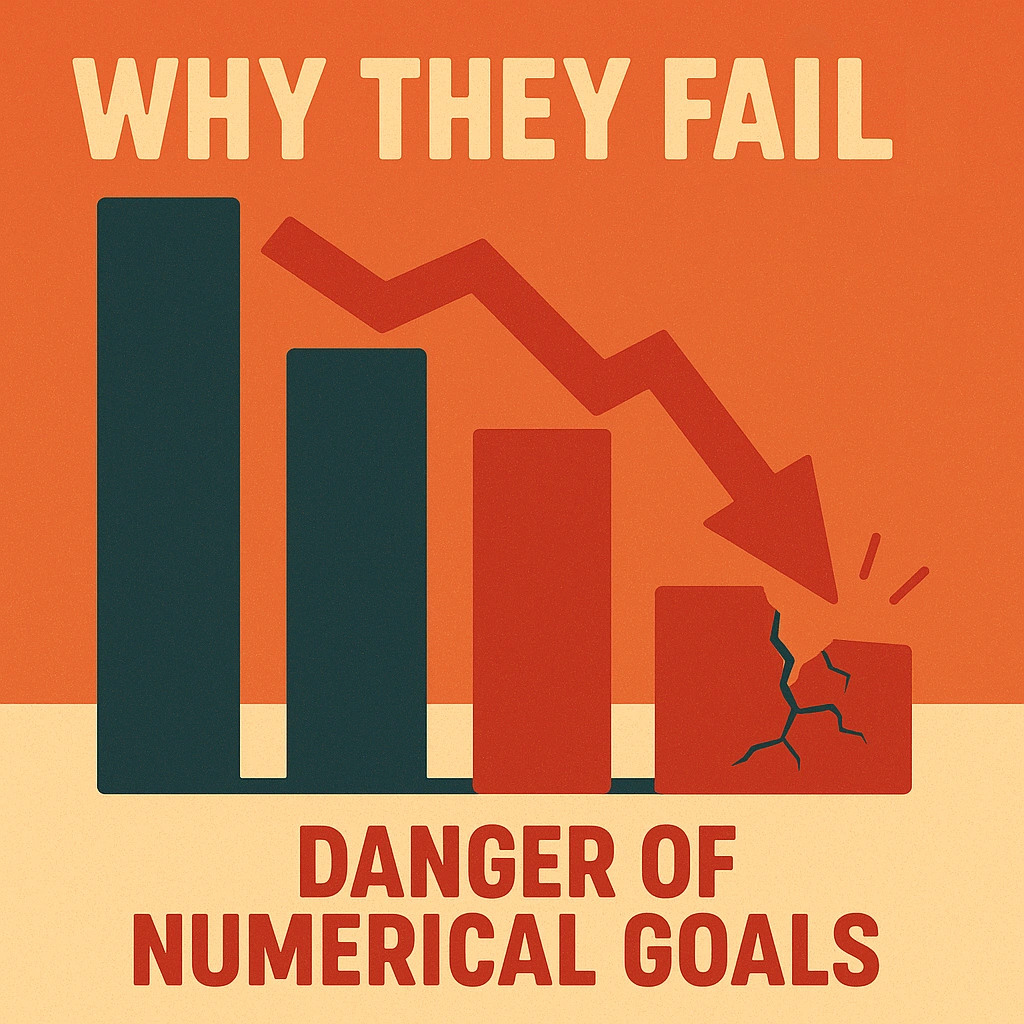
[00:22:48] Speaker D: No, nobody, Nobody. They're scared, right? They're like, well, why are you improve my process that I do something wrong? So they didn't start out by training the people on the floor, by allowing them to have the ability to make change. And that's what you were talking about, building the culture, starting from the bottom. I have one question though. When you build the culture, just like in, in developing a charter, you have to have a problem statement, a goal statement, and in an organization that usually shows up as KPIs as key performance indicators, targets. So most likely in the Bay county, you've got some targets set, right. That you're having everybody kind of march towards.
[00:23:30] Speaker A: With my yellow belts, Yellow belt course only. This is more of an introduction. I don't want to lose them. I don't want them to wander off and like, I hate this course. I learned this a long time ago. I talked about being a cop. I wasn't a cop, I was never a cop. But I, I was a safety officer, which is basically a cop. I was a safety NCO in the Air Force. I was a safety officer in the army. I love safety and I love it so much that I realized that you have to build that culture. Because if I come around, people start putting the Eye Pro on, they start putting gloves on. And I wanted them to already have that stuff on. I want them to be part of that before I walked up. Because I've investigated fingers being lost. I don't want to do that. I'd rather you have all your fingers at the end of the day.
You build that culture how? Well, what kind of cool PPE stuff do you want? Your personal protective equipment? Do you want what makes your job easier? I will order it. I will find a way to get it. I will go talk to the boss. We'll work it that way. You build that culture so when you walk by, they're wearing their Eye pro because it's not nerdy looking. There's not the chemistry goggles from high school. It's not the wrong type of gloves to work with this chemical. It's the right gloves. But you build that culture. So that's why I take that along with full size candy bars. It's a Halloween candy. I'm the full size and Krispy Kreme donuts and all those other bribe a lot. But what I do is I take it to the yellow belt course. I don't use the KPIs. I don't use what, what they're doing I for yellow belt only. What irritates you about a process, what you're doing right now? I want to make it personal to you. I want you to say, this has irritated me. I've been working here for so long. This is irritating me. This process where I've got to take the paperwork from this point to this point, this point, to this point, to that point, and then maybe it gets robbed of the right person. That irritates me. I wish somebody would do something about it. Well, this workshop allows you to do it. I want you to find a project, a process to improve that impact your life because you're going to take it personal at that point in time. You're going to enjoy it. You're like, at the end, I fixed it. I did this, I did that. So for yellow belts, I give the limits to. We have to be done by this date. This is our presentation date. So we're not going to fix homelessness in this point. But if it's a process that irritates you, that you're just fed up with, let's talk about it. Because some you can't do, because some are like, I want to implement this new technology. Well, do you have the checkbook? No. Okay, we'll scrap that one.
[00:25:51] Speaker C: Let's.
[00:25:51] Speaker D: We'll move on.
[00:25:51] Speaker A: Let's do something else. Let's do something we can learn by and do. So I don't use those, the green belts. I do because that's a little more intense and that's a longer run of things. But for the initial yellow belt course, I like to make it fun and make it, man, this, this irritates me beyond belief. I like to have this. I like not be able to do this. And at the end, you can see them all, like, happy when they present that. Day one, they're all confused, but day last, they're like, man, I can't believe we did this. People in the office love this. There's no more doing this. There's no more doing that. Now we do this and it's working. And we've had it working for 35, 45 days now. So that's what I do for the yellow belt. But I agree with the KPIs.
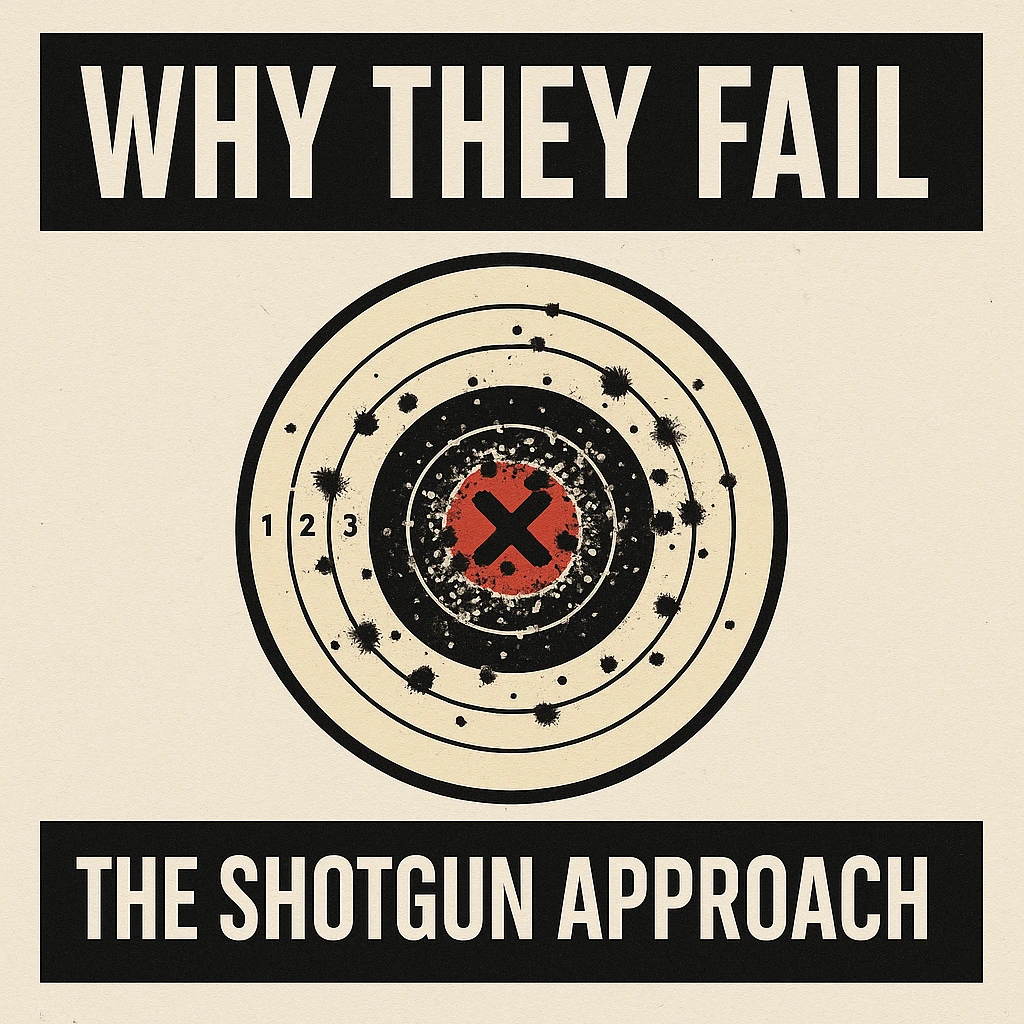
[00:26:31] Speaker D: I think that that's a good way to build culture in the beginning. But I know that over time, if you, if you create the culture of just doing that, then we're just taking a shotgun blast and hoping that one of the beads will hit the target.
So over time, all the small improvements will have an effect. But if we don't have, you know, a structure of, of what we're going to get to eventually it's, we might go off into left field. And that's, that's, that's one thing I see in a lot of companies is, is we don't really, scientifically, we don't have an infrastructure in place. We don't have botting executives, we don't have champions. We just train people and then send them arbitrarily out to solve problems.
[00:27:16] Speaker A: Exactly.
[00:27:16] Speaker D: And one problem that somebody solves might actually have a detriment to somebody else because they don't really understand how that whole process works in a system. They just know theirs. So I make my process faster, but
[00:27:31] Speaker A: by doing that, slowing this guy down. Exactly. The green belts come in. I do that for the green belts where we're like, we need to coordinate because we had onboarding, I think last group onboarding, and then it was onboarding for emails and then a lot of onboarding stuff. And you're like, well, I would like onboarding be quick also, because I don't like onboarding. Who likes on, who likes sitting there going through onboarding? No one likes it, but you have to do it because I don't have your information. You had to get your ID badge. You don't have an email address yet. You have to do this stuff these days. And we're talking and it's like, well, how does that impact him over there, the IT guy? Because he's part of the process for the emails. So we try to speed him up and do everything a day prior. How does that impact his life? Wait, if we do that, how's that impact this person over here who does the ID badges and the HR stuff further down and the healthcare stuff, it just cascades. So you guys, we gotta figure a way to look at it all as a bigger picture and make sure that we're all gonna be happy at the end of the day. And we're like you said, we're not Robin Pierre at 8 Paul. Because that's gonna keep happening over and over again. And then it's just eventually you're gonna be back at zero.
[00:28:40] Speaker D: Right.
[00:28:40] Speaker A: Trying to figure out what happened. But I agree, you gotta, you gotta look at the whole picture. If you don't, if you're going to be running in circles.
[00:28:47] Speaker D: And I think really that picture comes from the top. What is the biggest warning sign you see when local government managers try to launch a hundred percent yellow belt deployment without an infrastructure? They just get a bunch of yellow belts Train them, have them send off to solve whatever problems they need to solve, and again, hope that it's like a shotgun blast. At least a couple of the bullets are gonna. Or the beads are gonna hit the target.
[00:29:15] Speaker A: I would say not dart. I've seen it in healthcare, more healthcare. There's so many hoops to jump through for the management of the teams. The yellow belt people, they don't have guidance, they don't know the direction we're going in whatsoever. And I've seen this in larger hospitals where I've worked with those workshops, and it's just complete chaos. And then you incorporate 12 hour shifts, three days on, two days off, that's a whole different matter. But complete chaos. Just because the leadership, as a champion or a sponsor or the manager, wherever you want to fall into that ladder of things, you've got to give some kind and guidance. You've got to give the direction we're going. And every workshop we start here at Bay county, the county manager comes down and says, hey, it's me. This is our goal. I want you guys. This is great. You know, we're going, we're going to go through this together. We're going to be this. And at the end, I'm going to be here to watch your presentations.
Whereas I've seen other ones where it's like, good luck, everybody. Figure it out. And it's just chaotic. And then that's 50 to 55 emails from everybody every day, like, I don't know what to do. I'm like, I don't know either. I don't work there. I don't know your workplace politics of who can do what, who can't. I don't, because that person didn't tell me either kind of things. Everybody's lost and we're just kind of treading water until the end of the course, which is never fun, even for me.
[00:30:30] Speaker D: A lot of my classes said we have to go through that. So there is no structure. Somebody takes on a project and in the middle of the project, somebody changes it. Some leader changes or put some improvement in place. So I'd like to think again that continuous improvement has to be built like a house. Before you build a house, before you start swinging a hammer, you, you've got to have a plan, got to have money, you got to have buy in. Your leaders have to buy into it, and then you have to have money, you have to have structure, and then you have to have a plan so you don't start swinging a hammer at a house to. It's actually been planned out. I'd tell you, very few people that I engage that want training, has any kind of a plan. They just want to train a bunch of people to go out and solve problems. And then six months later when they lay off the continuous improvement group because nothing has changed. Well, they've done that because they haven't picked the right projects. They didn't look at that more scientifically. And then start training yellow belts and green belts and assign them projects to have a correlation to progression the KPIs and making sure that the right practitioner takes on the right kind of project. Like, you're right.
[00:31:44] Speaker A: And that's the key right there. The right person for the right process approval sometimes. I had processes in the past where we were doing workshops with a team out in Arizona, a local government out there in Arizona, and they were teaming up a police officer and a Parks and Rec guy to work on a pool project.
I was like, where does that cop know about pools? I mean, you don't have to know a lot about it, but he's on the wrong shift, he works differently. Let's do something else with him. Let's put him somewhere else. But it's a weird thing when you place the wrong person in there and put the onus on somebody who doesn't know anything first off about process improvement and then put him in that process improvement thing where he knows nothing about anything.
And then you're trying to figure out how does this correlate to the bigger picture of life here. And they can't figure that part out either. It's like, I get it, but I'm not in charge of your county. I love to help you, but I can only go so far beforehand. But that's why I lucked out here. It's a easier life here where it's like, hey, we've tried this in the past. We've tried this way. We tried this way. Tell us your way. I said, we're going to do this way. And then as we go to the next gen, we're going to add two. We're going to keep building. We're not going to start putting the roof on the house like you said, because the foundation stuff, we hadn't picked the lot yet to build the house where we got, we got the roofing material that make no sense. Let's find the lot we like first and clear it, and then we'll come, then we'll start doing stuff. But again, that's why I lucked out.
[00:33:04] Speaker D: And it's not a great Analogy.
[00:33:06] Speaker A: I like this every time. This is. I tell you, I've done a lot of workshops, it's not like this every place.
[00:33:11] Speaker D: You're telling me. What I'm really learning from a lot of people that I do podcasts with is is there has to be structure. And I believe in structure. I'm a very engineering minded person. But you also have to have culture. You have to build a culture. Because structure is not going to build culture. It's going to build the foundation and the stuff around it. But you need culture to keep it going. So I really appreciate that.
How can the next generation of practitioners build sidewalks and open doors between departments to keep value flowing without destroying the necessary structure?
[00:33:48] Speaker A: So what I do, and this is Milio's technique only I tell people to walk over there. So we're doing projects in the workshop and the IT person is doing something in the animal control person doing something. Just go to animal control, go to it, see what they're doing. See what the pro. I have a question. I got stuck here about this. I'm the coach throughout these projects. I get that. And I will respond to email super quick. And it kind of astonishes some of them how quickly I respond to it. I'm like, well, you know, it's 2026, it's on your phone. I can just do that right quick. But maybe you have a weird question and I'm talking to somebody else. Go to your counterparts because I guarantee you they had the same question. I guarantee they've either had the question, they've answered the question, or they're about to answer the question. So collaborate. You can find out so much more if you talk to the person to the left or right of you and stumble through it to just a little bit together. And when you get really super stuck, then call me. You don't need to call me any time. But if you collaborate, if you go to different sections, first off, you see a new place, you meet new friends, they might have good stacks. And then lastly, you get to collaborate and say, I did this. What do you think? You're like, hmm, didn't think about that. How about this, right? Oh, there we go. And it kind of, it brings me back to when I was a safety officer and you do a pre accident plan, which I always thought was kind of funny. You do a pre accident plan for the plan or whatever. So you do you a plan, something happens and the inspector comes down and I guarantee you my pre accident plan was the most perfect plan ever. I mean, just a glorious plan. And he goes, cool. I love it. So he went over to the lowest ranking person and flight operations and says, a helicopter just crashed here. And the kid was like, ah. He goes, all right, thank you. Came back, sat me back, and he goes, it's a great plan that you understand, right? But how about that guy? I'm like, that makes sense. Because I'm not the one doing it, you know, I'm just the one drafting it. So just like collaboration, they might see something different when you go talk to somebody. And like, there you go. So I think building those sidewalks, getting those doors, hanging out and talking about this and saying, I don't understand this. Why is Emilio asking for this? Why do we need a Fishbone diagram? Why do I gotta ask why five times?
Why do I need a control plan? This makes no sense, you guys. Talking it out makes sense. After a while it's like, that does make sense. And that's how you build that culture at the end of the day, because people are kind of conversating about things and hanging out and having the same, again, speaking the same language. Which makes it, I think, more fun. A bunch of nerd stuff, but still fun.
[00:36:18] Speaker D: We teach yellow belts all over the world.
We have a couple coming up, but that's one of my favorite classes to teach. We use a proprietary process mapping that kind of involves everybody. And it amazes me. I go into, especially union environments where people have been there for 30 years, and this reasonably young guy comes in and is trying to solve a problem, and they sit in the back with their arms crossed, like, who is this young whippersnapper? And usually after the first day, especially when we're doing the process discovery through a process map, I see those people uncross their arms and move up a little bit.
But it's not until the next morning before class starts, that I have three or four of those people come in. Well before the class ever starts, because we have the process map up on the board, and they unfolded their hands and they're kind of looking over like they're standing over a forward engine. And I asked them, what. What do you see? What's going on? You missed something here. This needs to go here. So I started engaging them, and that process map expands. And that's what you're talking about. Walking to different department, walking to a different place, Right? But you get them all involved in developing this process map and making sure that everybody participates in it, and you'll see that. Why are you doing this? I'm doing this over here. And you're Doing this. We're all three doing the same thing. But I didn't know you did that.
[00:37:47] Speaker A: Right, exactly.
[00:37:49] Speaker D: So 90% of your improvements are going to come from just the fact that, that you know what's going on outside of your silo.
[00:37:57] Speaker A: Yeah.
[00:37:57] Speaker D: And learning.
[00:37:59] Speaker A: It's weird that you can solve that many problems that way. Right. If you just go like this, hey, are you taking the copy machine also, are you changing the paper also? I'm changing the paper. You're changing the paper. It's so weird when they start pointing at each other going, we should. Well, who's going to do this? Now we can just make it work.
[00:38:14] Speaker D: We should all talk to each other
[00:38:15] Speaker A: and we just combine this. It's perfect. And you're like, man, we just saved. And money to me is fine. Like, you save X dollars. That's cool. You and I will never see that. Money I like is time saved. I like that when I find a person and I'm like, I don't have to walk 46 minutes back and forth now to hand this paper that I have to get signed now, we drop in the Dropbox, it gets routed correctly, it comes back digitally signed. It does this, it does that. I like those kind of projects. It makes the person who does them like, I did it. Saving $4 billion. That's neat. But it's the. I saved this. I don't have to do this. I don't. We could do this. I could do other things instead of doing this now. I. It's. This is all kind of situated and it's a neat process to see at the end when everybody's like, ding.
[00:39:03] Speaker D: Nice.
[00:39:03] Speaker C: What an incredible conversation with Emilio Natalio.
This episode really drives home the reality that continuous improvement cannot just be treated like leadership's new toy or a quick fix. If you want your organization to thrive, you have to build a sustainable house from a rock solid foundation, starting with genuine executive engagement and clear, unfuzzy key performance indicators. We covered some massive takeaways today from the danger of isolated corporate silos and fake paper belts to the massive value of capturing the true voice of your operators on the floor to help you protect your own deployment from these exact traps. And make sure to grab a completely free digital copy of my book, why they Fail and the simple key to success by clicking the direct link right down in the show notes below. Thank you so much for hanging out with us today. If you found value in this episode, please subscribe to our YouTube channel, which is a completely free and powerful way to support the work we do here.
Make sure you are also actively following the podcast on both Spotify and Apple podcasts so you get every single new episode delivered instantly to your device.
Finally, if you love what we are putting out, please take a quick moment to leave us a five star review as it helps us reach more leaders looking to transform their operations.
Until next time, keep looking at the data, engage your process owners and stay grounded.