Episode Transcript
[00:00:00] Speaker A: They had one metric when I got there and it was how many money they shipped that day. And I think the goal was like $800,000 a day whether it was accurate or not. They weren't even monitoring that. And there was big fines and penalties that they were going through because there was a lot of misfits and inaccuracies. But that was the only metric they had. And we implemented throughput. We ended up implemented pieces per hour.
Accuracy was a big one. We had no inventory team. We created an inventory team and an audit, a daily cycle count to try to find the products and this and so and we posted those everywhere and we talked about them in our start of shifts. I'm a big fan of the start of shift. You know, it doesn't need to be that long, but talk about the wins, talk about some challenges, celebrate those who are doing a good job and bring the team together and set the tone for the day, if you will.
Welcome to why they Fail, the podcast that pulls back the curtain on why continuous improvement efforts fail. Buckle up because we're not here for motivational fluff. We're dissecting the short sighted decisions and leaders agendas that sabotage CI success. But don't worry, we'll clue you in to the few simple keys to success to avoid these pitfalls. If you're ready for the truth, let's do this.
[00:01:22] Speaker B: Welcome to the why they Fail podcast. I am your host, Kevin Clay, master black belt and CEO of Six Sigma Development Solutions.
Today we are diving deep into a harsh reality that many corporate leaders try to ignore with a very special guest, Ben Harmson. Ben is a military veteran who spent 12 years at Chrysler Corporation during the historic Daimler Benz merger where he was first introduced to lean transformation.
He later brought that foundational expertise to Coca Cola, optimizing distribution centers and scaling an underperforming facility from the bottom of the rankings all the way to number one in the country.
Today. He applies these rigorous principles as a continuous improvement leader in the underground construction industry.
In this episode we explore the foundational architecture of operational excellence and break down Ben's raw firsthand insight that while he has never seen a great culture with bad leaders, he has always seen bad cultures with bad leaders. Let's get into the conversation.
[00:02:35] Speaker C: Ben, what was your catalyst? What got you into continuous improvement?
[00:02:39] Speaker A: What started your journey was pretty early on. I was at the Chrysler Corporation when Daimler Benz and Chrysler merged and we went through a lean transformation. At the time I didn't know what it was, but I was part of a Lean team, that was my introduction, but I had never worked anywhere else other than the military. I was at Chrysler for almost 12 years, so I only knew what I knew. And I really didn't understand what I was learning at the time. It wasn't until I left and got to Coca Cola where going into Coke, I thought it was going to be shiny and bright and everything's going to be perfect because of the brand.
And come to find out that was not the case. I immediately saw the opportunities from what I had learned and how they could apply. Being the new guy. I was really just a guy with an opinion. Not that we weren't doing some good things, but I didn't have anything that proved I knew what I was talking about, especially being so new in their network. After we started applying some things, getting some wins, and then I went to school using their program, that gave me more credibility. And then of course, the wins that we were having, then applying it, learning more as I went to school and seeing the results, that's where I was just hooked. I apply it to everything now. It's not just about distribution. Of course you can use it in every aspect of your life. I've seen the results.
It took a little bit to get there, but ultimately it was just the experience of it. And seeing that it actually does work when applied, I couldn't help but believe in it.
[00:04:03] Speaker C: When you say it was applied, what's this? The Lean Six Sigma methodology. Were there other methods that you employed?
[00:04:11] Speaker A: It was Lean Six Sigma. I think the biggest part that I have found, it's all a process control. How are you inspecting what you expect? How are you making sure that the standards are being met?
Rather it's how you perform a task or the results from that task. I think that's where a lot come up short. You can do a lot of things. You can write as many sops and work instructions and create visual management.
But if you're not really going out on the floor and watching what the people do, auditing the process, auditing the system and ensuring that people are following it and it can be approved upon, if there is waste in there without control, then you really don't have anything without control. You pretty much just wasted your time. I doubled down on the control piece.
[00:04:54] Speaker C: Okay, excellent. That's really where a lot of people miss out. They don't control the process, they improve it, but then the improvement doesn't sustain because they don't put in the control, the visual controls, the controls at the operator.
It's a good epiphany what was the absolute catalyst that pivoted you from frontline warehouse operations into Villanova Master Black Belt?
[00:05:20] Speaker A: I think it was living in it. I believed it to begin with from what I had learned, the foundation, but it was really going to Lakeland. And when we transformed the Lakeland facility, we were second to last or last in our market unit and ended up becoming number three in the country out of 330 DCs, and then ultimately number one after I got promoted. So that was a good thing. But a few months later, they became number one. It was a team effort and we all bought in and it took a lot of time. We changed the culture. Not that I didn't already believe it, but the data was there. It was data driven, it was fact based, it was an opinion. The scorecard was out there and we were winning. That's where I knew, and that was quite a few years ago, but that was my first major success with Lean Six Sigma.
[00:06:02] Speaker C: What kind of tools did you use? Were they more qualitative tools? Were they more statistical analysis? You talked about using data to improve the process, but was it more of a qualitative fix or was it more of a data rich analysis of the process?
[00:06:21] Speaker A: It was really around controls and accountability. We had work instructions and SOPs, but nobody cared, nobody watched. If people were even following them at Coke, we had plenty of metrics, so that was great. Now one thing we did do with the data was optimize the warehouse floor, making sure that we had enough in our pick locations for a day and a half worth of work so we weren't replanting and bottlenecking the picking process. Ultimately, it was the culture. I see this everywhere I go. This is almost, dare I call it, the root cause of most things. It's the leadership or lack thereof. I've never seen a great culture with bad leaders, but I've always seen bad cultures with bad leaders. When we came in and implemented what was already in place or should have been, and then stayed consistent with our auditing and coaching and accountability, eventually that culture, it just shifts. It takes time, but it shifts. And when you start winning, the culture itself weans out the negativity. It was really about focusing just on the fundamentals and making sure that we were taking care of the people and coaching accordingly.
[00:07:23] Speaker C: I hear this from many practitioners. The tools are great, but if you don't have a culture, then you're going to shoot the methodology down or any continuous improvement down. I'm with you that I go into places all over the world My colleagues do. And we have one metric that really tells us whether an implementation is going to succeed. And there have been quite a few that haven't. And that's the engagement of the leaders. Most of them say, well, this is VP Joey Bag of Donuts, his baby.
Don't impede upon my agenda, ask him. And I see those fail all the time.
Culture is a big deal. Leadership is a big deal before the methodologies can be put in place and actually start to sustain.
[00:08:11] Speaker A: Absolutely.
[00:08:11] Speaker C: Why did corporate leaders consistently try to buy the way out of problems with massive space or an expensive BMS before they actually stabilize their baseline architecture?
[00:08:23] Speaker A: I think because changing culture is extremely hard and most people don't probably really know one how to do it because it does take time, it can be costly. But they don't see it, they don't believe it, because maybe they're just profitable or maybe they run a decent organization or get a decent result. They equate that I must be doing it right. They double down on something like a WMS, which WMSs are fantastic, of course, but in a broken process or in a bad culture, it's not going to fix that. It's not going to fix what the problem. I think it's because they don't see or don't understand the fundamentals of that foundation that needs to be in place before you put the.
[00:09:01] Speaker C: So how did you build a genuine capability culture at Lakeland that really kept work disciplined but allowed the team to actually have fun with their process? How did you get that facility to number one?
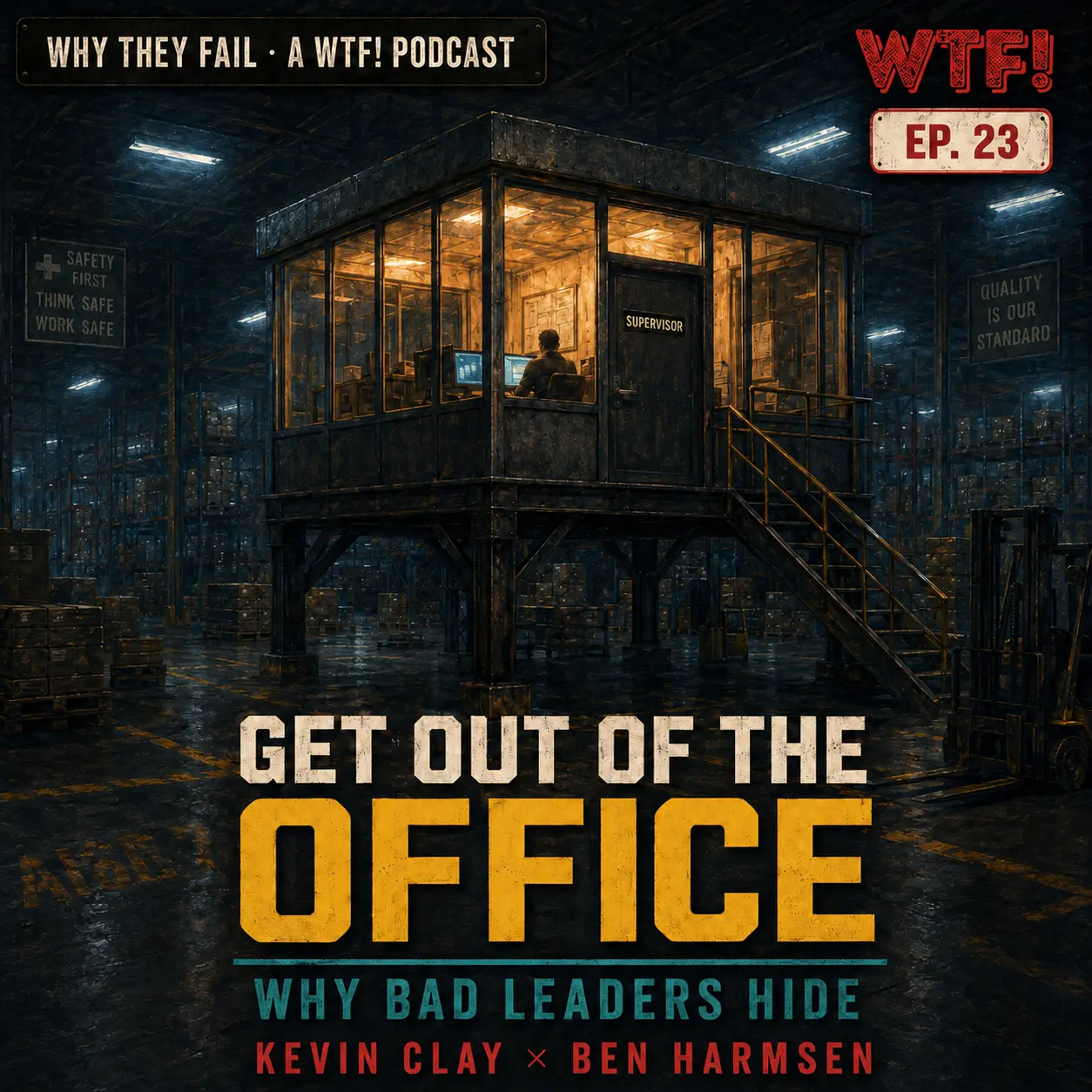
[00:09:13] Speaker A: It was just being consistent with what we were doing. It was a rough culture. First thing we did, super advisors were in an office. We pulled them out of the office, we put them out on the floor. We built the platform, dare I say we had to force that a little bit of the engagement. But we made them visible and made the operation visible in turn to them. So just to get visibility, because that's one of the most important things is understanding what's working, what's not, and where you're at currently. And we actually turned their supervisor office and we called it the Lakeland Library. And we had all our SOPs and work instructions both on paper, in binders as well as on computers. We had people of all ages, people learning in different ways, and we purposely allowed people 30 to 45 minutes a week to go in and study whatever they wanted, whether it was the current job they were working on or maybe a job that they wanted it to work towards. Once they saw that man, this is different. We are doing things that nobody else was doing, at least in that little network that we were in. And we were being fair. I think that's another piece. When we were coaching and holding accountable, it was very specific and fair to a standard or a system or process or a choice or lack thereof. So there was no arguing you could be unhappy about it, but you couldn't say that it wasn't fair. Over time, as we coach people up, of course, some people got coached out. And we went through that and started winning. I mean, winning is fun. We didn't go in there trying to build a fun culture. We went in to build a winning culture. And from that it became fun, because winning is fun. It is about the people make sure that they have the education they need so that they can understand what to do, make sure that they have the tools they need so they can actually get the job done. And then ultimately they understand what the expectations and goals are for that particular task or whatever it is they happen to be performing. That's what we did. And then we felt at that point that, hey, we had done our jobs, we had set them up for success. Now they have to go be successful. That's really what it came down to. And we were having a blast at the end. Everybody wanted to come see us, and quite a few did. I mean, the senior vice president for North American field operations came through. And because of what we had done and toured the place, many people got. I got promoted after that. Another individual took my role. Our inventory clerk went to the finance department because he had a degree in accounting. Several things happened there because of all the hard work. And so it was a lot of fun. But it started with winning, and that started with being systematic and disciplined.
[00:11:35] Speaker C: Success breeds more success. When you win, everybody's happy. When you don't win, that's when they're not happy. And I want to ask you this.
A lot of companies that we go into ask us to train a certain amount of green belts. We ask them, what kind of a infrastructure do you have for those green belts to survive? Because if you don't have that structure, it's like having a surgeon without a hospital and nurses or without support system. We asked them that question. And I usually get what is the equivalent of a blank stare. I don't know what that means. I just know I want a bunch of people to go solve problems, whatever problems I point to. And I know from that point, from listening to, that they're going to fail. There is not a structure put in place for that green belt or black belt or practitioner to actually make sustainable change.
When you took this facility from last to first, did you do it in a manner where you understood what are our KPIs, what are our targets and what projects are going to get us closer to those targets quickly with little resource and have the biggest gain? Or was it really kind of a shotgun blast where you said, okay, let's just give people the tools, standardized processes and kind of let them go out and make whatever changes they want?
[00:12:55] Speaker A: No, we run the play, whatever that work instruction or SOP is for, whatever the task is. We had to optimize the floor. The floor was not optimized at all. It made no sense the way it flowed and how much product we had in locations. Constantly waiting for letdowns, constantly waiting for replenishments. From a picking perspective, the productivity was suffering greatly, but it was because the floor was just simply not optimized. That was one one of the first things we did, talked about that library that we put in and allowing people to train. But we built the process, audit control process, where every day we would audit, I'll call it five different processes, and the supervisors did that, where they watched the individual perform the task. And we coached and graded according.
Every 30 days we had a full blown audit on how we went to business. Since we made that part of the day to day, the coaching got better, the people got better, and it was real and we had our scores so we could see our improvement month to month on how we did the work. Ultimately, when we focused on how the work was getting done, then the KPIs, our productivity, our accuracy, our inventory control, the downtime that we were seeing, it didn't go away. There's always going to be a little waste and everything. But that's where we were able to really grow our metrics. And a lot of those metrics were part of the dashboard that said that we were number one out of the 300. So on places I hear a lot
[00:14:20] Speaker C: about the control, controlling the process through standardization, and that's a great thing. But what happens when you try and control a process that's broken? I've seen many companies that say, let's standardize first. And then they standardize a broken process and then they've actually written down that you do things that are wasteful. How do you reconcile that with making sure that you don't standardize a broken or a variable process or process as it causes variation?
[00:14:49] Speaker A: That's a great question. I think you have to start somewhere. Even if that somewhere isn't the best, because at least it's a habit. And then when people are doing the same thing, or you've got 10 people performing the task relatively the exact same way. Well, the good thing about that is you're going to get 10 different opinions on what's getting in their way. I think, like all things from a continuous improvement perspective, I think you gotta be able to start somewhere. You gotta know where. Because if you don't know where you're at, you'll never get to where you want to be. I think it's more communication and feedback very early on when you standardize something and you know that this could be better, but at least we're being consistent across the board. We'll get that feedback and then we'll remove the waste, which will usually come from the people performing it. Because they'll say simply like, I don't understand why I have to do this. It takes me the extra time. It doesn't make sense. Or they don't have the right piece of equipment, tool, whatever the case may be. They'll tell you if you ask them enough and they see that you take action to make it better.
[00:15:45] Speaker C: It all goes back to.
It's hard to improve upon a chaotic process. You've got Johnny and first shift, Jimmy in second shift, and Jennifer and third shift. And they're all doing the same exact thing, but they're all doing it completely differently because they learned how to do it from a person that they shadowed for 24 hours or a week that had been there for 20 years. And that person then looks at them and goes, well, all right, we're finished. Are you good? And that person's going to go, well, yeah, I know what's going on. Even though they don't. Because they want a job.
I deal with that with a lot of companies that want Six Sigma. They want these very database tools, but they don't even have work instructions. It's very hard to optimize a process that has no foundation.
[00:16:30] Speaker A: Yeah, absolutely.
[00:16:33] Speaker C: What is the first emergency lever you pull when you inherit an operation that looks like the chaotic end of Raiders of the Lost Ark?
[00:16:41] Speaker A: Yeah, that was a heck of a thing that we did there. But it's visibility for me. We have to know where we're at. You know, rather, those are the things that we're doing relatively well, or maybe one or two things we're doing extremely well, but certainly the things that we're not. When I walked into that particular operation, large facilities, 750,000 square feet and the inventory was everywhere. I think there was about $3 million they couldn't even locate. It may have been physically in the building. I think we recouped about $2.2 million when we did a wall to wall about four months later. And not just visibility to process. It's visibility on the people who's my strong ones, who are the ones who I can lean on a little bit. Because you got 300 people in a warehouse, one person can't do it all by themselves. So visibility to where the biggest challenges are and the things affecting the bottom line, typically productivity. But even more so, I'm much bigger on accuracy. I don't care how quickly you get it done. If it's wrong, don't be in a hurry to get it done. Be in a hurry to get it right. Understanding where we're at from a process perspective, whether we have a true standard in place or not, and the people as well, who are the ones with the right work ethics, attitudes, who want to solve and then empowering them. Once you know where you're at, you've got visibility. Hey, I'm in a tough spot, you know, now you can start putting a plan and prioritizing to get to where you want to be. Just one step at a time.
[00:18:03] Speaker C: Visibility is great. Word. I know you have been in several places, but I'm walking to manufacturing plants where I have no clue what's going on.
There's inventory everywhere. If I want to know how a process is running, its throughput, maybe how they're doing with 5s, and I ask somebody, I consistently ask people on the floor, what are your KPIs, what are your targets? And they usually come back to me with a blank stare and say, well, ask my supervisor or ask my leader, which to me is ludicrous because the one actually doing the job is not the one who is measuring what they're doing.
So I go into other facilities that have visual management. They have things available to them. So I look up and I see an anon board where there is understanding of what our attack time is or what our production throughput and all that is. So is that what we did at your facility? You started to make things visual so the operator could really see what was happening and see their pace of the process and where they are during the day, how safety is, how throughput and all those metrics?
[00:19:11] Speaker A: Yeah, we put a lot in. I mean, at that particular company, they had one metric when I got there and it was how much money they shipped that day. And I think the goal was $800,000 a day whether it was accurate or not. They weren't even monitoring that. And there was big fines and penalties that they were going through because there was a lot of misf and inaccuracies. But that was the only metric they had. And we implemented throughput. We ended up implemented pieces per hour.
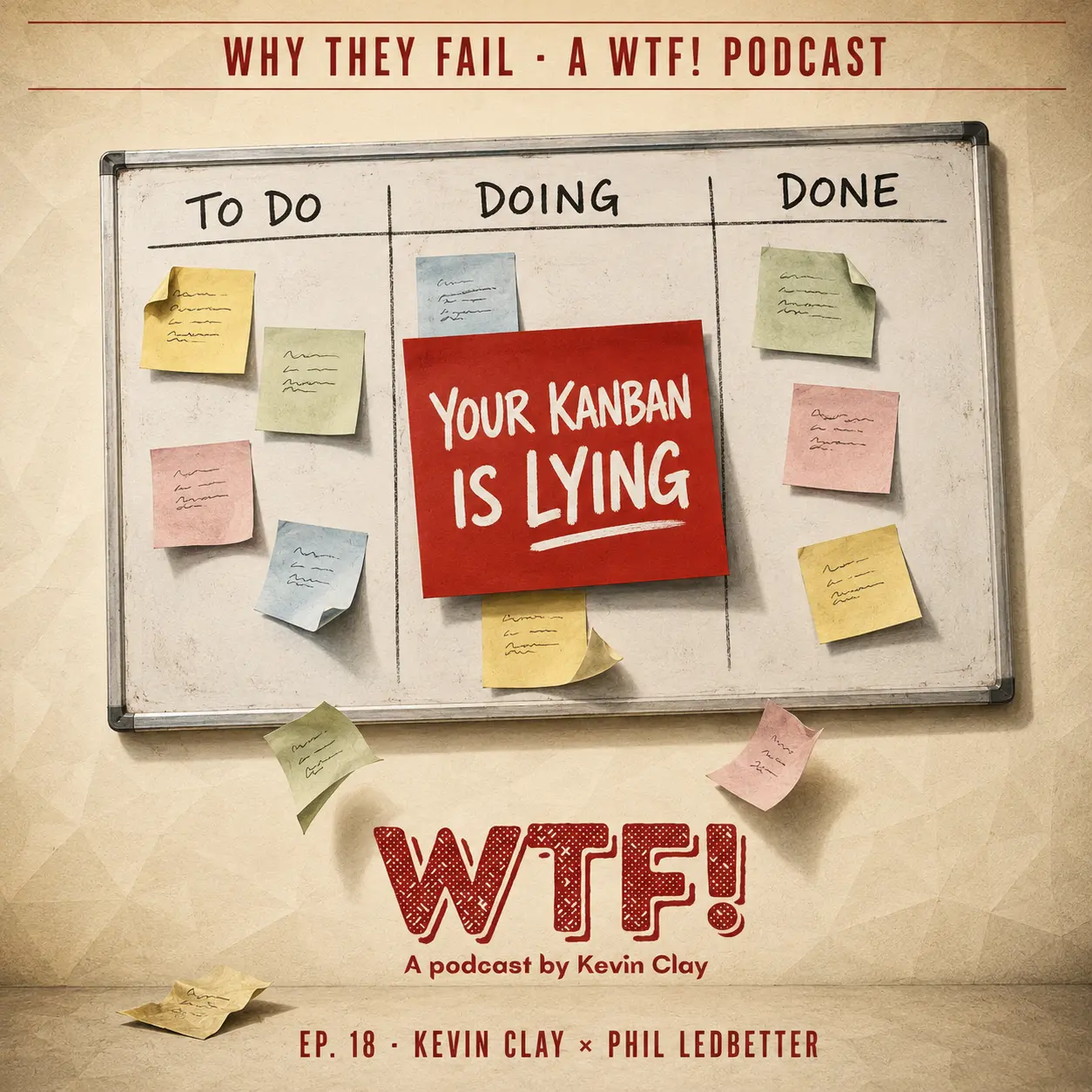
Accuracy was a big one. We had no inventory team. We created an inventory team and an audit. A daily cycle count to try to find the products. We posted those everywhere and we talked about them in our start of shifts. I'm a big fan of the start of shift. You know, it doesn't need to be that long. But talk about the wins, talk about some challenges, celebrate those who are doing a good job and bring the team together and set the tone for the day. All those KPIs be postals everywhere. And I've always done from a visual management perspective is when somebody says nobody told me what to do or I forgot. That's another big one we got. Hey, why would you do that? Right? We're supposed to be doing well, I forgot. So right there I'm going to put up a piece of visual management. Usually we would do these boards. We'd have the SOP on it. We'd have a picture because pictures tell a thousand words of what success looks like if it was the back of a trailer or how you make a palette and how things should be stacked neatly and shrink wrapped in pictures. Sops, bright visual boards right out on the floor. Now we eliminate the excuse. You may have forgot, but we built you that tool right over there. So if you forget, it is on you to go over there and re educate yourself if that's what needed or ask more questions. And when you do that, when you eliminate the excuses, people have no choice but to go to work. There's no more reason why they can't.
[00:20:51] Speaker C: You get rid of the ability to have the excuse by taking that excuse and turning it into something visual that better operationalizes the process. That's great. That's continuous improvement. Eventually you have a process where the operator doesn't talk to anybody. The process tells them what's going on.
And I've seen that. That's amazing transformation when you get to that. From infrastructure construction to beverage distribution. How do you successfully convince non manufacturing teams that the math and the fundamentals of the lean Six Sigma apply to about everything?
[00:21:30] Speaker A: It's through examp. I'll use the underground construction company I'm currently with. Now they had some measurables but it wasn't much. And I started with safety. They had the osha, T, R I R and Dart, but there was other things happening. We had safety inspections, and we really didn't score them, but we did them. What I started doing is just shining a light. That's what I was telling the owner. I said, I'm going to shine a light on this. We're going to find out where we're winning, where we're not, and then we're going to be able to see what we need to go and fix. And we did it. We started with that safety. We did it with safety. Then we started doing it with recruiting. I was really helping more on the talent development side, not the operational side. But once we had a couple of those wins and he saw the improvement, he's like, well, what's next? And then I started talking to him more about Lean Six Sigma. And I said, we may not be manufacturing, we're a construction company, but we manufacture trench. Right? We dig footage. That's what we do. So what's our footage per hour? What's our goals? And he's like, well, we don't have those things. So we started doing that, and now we have goals for how much trench per hour are we doing? How long does it take us to put pipe in the ground? Depending on the size of the pipe, backfilling or slurring, I don't know how many things we're measuring, but it's quite a bit. He has doubled down on it. He says, we're going to keep measuring everything because everything we have measured has gotten better. It's setting the example. You got to be able to start somewhere, even if it's small, just to show them, because people don't know what they don't know when you can show them. This simple process of getting visibility, shining a light on something, and then coaching based on the things that we're doing well and the things we could do better. Now it's going to turn the needle. And that's exactly what we did. We're measuring. We have a throughput. We literally have a throughput for trenching. I remember when I first brought it up, people are like, you can't do that. This is construction that doesn't apply. This isn't manufacturing. Heard all of that. This isn't a supply chain or this isn't a warehouse. And I'm like, okay. It's how much footage divided by how many hours it took to get it. It's that simple. We have our goals now. Same thing here. Tough culture. I'VE been here almost two years now and we've really turned it around. The culture's doing it now. It's not even me talking about it. They're talking about it. They it now and gone through it. If you don't come in and embrace it, then the culture squeezes you out. It's a great thing to be around once you get there. It just takes a lot to get there.
[00:23:40] Speaker B: Thank you so much for listening to this episode of why they Fail.
We covered some critical ground today, specifically how corporate leaders often try to buy their way out of problems with expensive warehouse management systems or massive facilities before stabilizing their baseline architecture. The ultimate takeaway from Ben's experience is clear you cannot standardize chaos, and true sustainability comes from visibility, systematic discipline, and leaders who pull supervisors out of the office and onto the floor to coach to a fair standard. If you want to dive deeper into stabilizing your own operational architecture, make sure to grab a free PDF copy of my book why they Fail and the Simple Key to Success by clicking the link in the show notes below. Subscribe to our YouTube channel because it is a completely free way to support what we do. Make sure you are following the podcast on both Spotify and Apple so you get every new episode instantly. If you found value in today's discussion, please leave us a five star review to help us keep bringing you these deep dives into operational training.
[00:24:53] Speaker C: Truth.